
Table of Contents
- What a Workplace Safety Audit Actually Covers
- What Drives Workplace Safety Audit Cost
- Cal/OSHA Compliance Checklist: What Auditors Look For
- Mock OSHA Inspection Cost vs. the Price of Non-Compliance
- Workplace Safety Audit Duration: What to Expect
- ROI of a Safety Audit: Beyond Avoiding Fines
- How to Prepare for a Cal/OSHA Audit
- Conclusion
Last Updated: August 23, 2026
What a Workplace Safety Audit Actually Covers
A workplace safety audit is a systematic, documented evaluation of an organization’s safety programs, physical hazards, and regulatory compliance posture. Auditors examine written safety plans, training records, incident documentation, equipment conditions, and employee practices against applicable Cal/OSHA standards and federal OSHA regulations. At McNeil Safety Consulting, we treat every audit as a complete diagnostic of where a facility stands and where it is exposed.
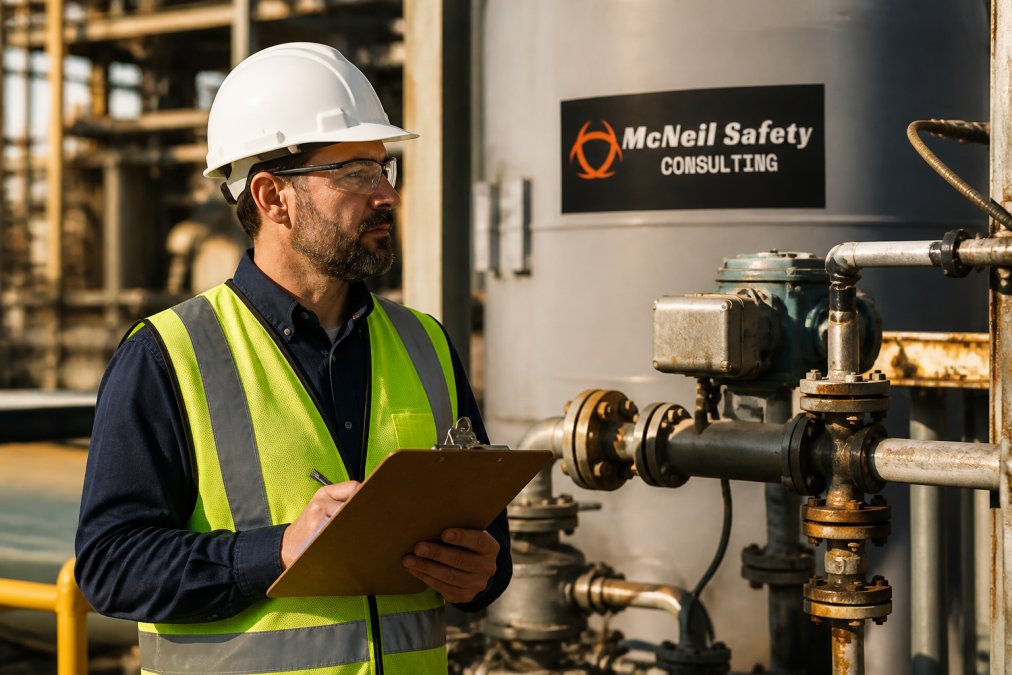
The scope depends on facility type, industry, and applicable regulatory frameworks. A construction site audit differs from an industrial facility review, but both follow the same logic: identify hazards, verify documentation, assess the safety management system, and produce a corrective action plan. An audit is not just a compliance exercise, it is a risk mitigation tool. Organizations that treat audits as checkbox events consistently miss systemic issues that produce serious injuries and costly citations.
Key Components: Documentation, Hazard Identification, and Corrective Action
Every credible safety audit covers three core areas:
Documentation review examines required written safety plans: the Injury and Illness Prevention Program (IIPP), hazard communication plans, emergency action plans, and training logs. Gaps here are among the most common audit findings and easiest for Cal/OSHA inspectors to cite.
Hazard identification is the field component. Auditors conduct site safety observations to evaluate physical conditions: machine guarding, fall protection, electrical safety, chemical storage, and personal protective equipment use. A workplace hazard analysis documents what is present, what is missing, and what requires immediate correction.
Corrective action planning generates real value. A written corrective action plan assigns responsibility, sets timelines, and creates documentation that demonstrates good-faith compliance effort. According to the Cal/OSHA enforcement guidelines, documented corrective action is a key factor in penalty reduction during citation contests.
What Drives Workplace Safety Audit Cost
Workplace safety audit cost varies significantly based on facility-specific factors: size and complexity, the number of regulatory programs that apply, the current state of existing documentation, and whether the engagement includes remediation support such as safety plan writing and citation defense. A small general contractor with 30 employees requires a materially different scope than a large industrial facility running multiple chemical processes.
The type of audit also matters. A gap assessment against IIPP requirements is narrower than a full safety program assessment covering industrial hygiene monitoring, environmental compliance, and occupational health programs. Firms offering full-service support, including medical surveillance coordination and inspection defense, carry higher overhead and specialized credentials reflected in pricing.
For an accurate cost estimate specific to your facility, contact McNeil Safety Consulting directly. Pricing depends on scope, facility type, and specific regulatory exposure.
Industry-Specific Cost Benchmarks
Construction, manufacturing, and industrial sectors face the most complex audit scopes and widest cost ranges. Construction safety standards under Cal/OSHA Title 8 cover fall protection, trenching, and excavation. Manufacturing facilities may trigger industrial hygiene requirements, including air monitoring and medical surveillance. Each additional regulatory program adds scope.
| Industry | Typical Audit Scope | Key Regulatory Areas |
|---|---|---|
| Construction | Site safety, fall protection, hazard communication | Cal/OSHA Title 8, IIPP |
| Manufacturing | Industrial hygiene, chemical safety, machine guarding | Cal/OSHA, air quality, medical surveillance |
| Healthcare | Infection control, ergonomics, bloodborne pathogens | Cal/OSHA, OSHA 29 CFR 1910 |
| Warehousing/Logistics | Forklift safety, fire egress, racking systems | Cal/OSHA Title 8 |
| General Commercial | IIPP compliance, emergency planning | Cal/OSHA, fire code |
Smaller facilities with straightforward operations require less audit time. Facilities with active Cal/OSHA citations, prior inspection history, or complex chemical inventories require more. The cost of non-compliance almost always exceeds the cost of a professional audit.
DIY vs. Professional Audit: A Practical Comparison
Some organizations attempt internal safety audits using downloaded checklists. This is better than nothing, but carries real limitations.
DIY audit: Relies on internal staff who may lack regulatory training, may not recognize hazard patterns specific to Cal/OSHA enforcement priorities, and cannot provide the independent perspective that regulators view favorably.
Professional audit: Conducted by credentialed safety professionals who understand current enforcement trends, know which violations Cal/OSHA inspectors prioritize, and produce documentation that holds up during inspection or citation contest. A professional audit identifies gaps that internal teams are likely to overlook.
A professional audit reduces risk in practice, while a DIY audit reduces cost on paper.
If considering a DIY audit, start with Cal/OSHA’s compliance assistance resources and inspection checklists by industry. Use them as a baseline, then bring in a professional to evaluate what your internal team missed.
Cal/OSHA Compliance Checklist: What Auditors Look For
A Cal/OSHA compliance checklist covers elements that inspectors examine during regulatory visits. Knowing what is on that list is the first step toward preparation.
Core items auditors evaluate:
- Written IIPP in place, current, and specific to the facility
- Hazard communication program with current Safety Data Sheets accessible to employees
- Training logs documenting all required safety training by employee and date
- Incident reports for all recordable injuries and near-misses
- Emergency action plan posted and communicated to employees
- Personal protective equipment assessment and written certification
- Written safety plans for any regulated processes (confined space, lockout/tagout, fall protection)
- Medical surveillance records where required by industrial hygiene standards
- Equipment inspection and maintenance logs
- Corrective action documentation from prior audits or incidents
The Cal/OSHA compliance resources and inspection guides provide the regulatory basis for each requirement. Gaps create citation exposure.
Missing training logs are one of the most cited violations during Cal/OSHA inspections. If training records cannot demonstrate who was trained, on what topic, and when, you are exposed regardless of whether training actually happened. Documentation is the proof.
Mock OSHA Inspection Cost vs. the Price of Non-Compliance
A mock OSHA inspection is a structured simulation of a regulatory visit, conducted by a safety professional before the real inspector arrives. The cost is a fraction of what a single serious citation can generate in penalties.
Cal/OSHA’s penalty structure assigns fines based on violation classification. Serious violations, repeat violations, and willful violations each carry different penalty ranges. According to the Cal/OSHA penalty structure and enforcement information, serious violations can result in substantial per-violation penalties, and repeat or willful violations multiply that exposure significantly. A single inspection can produce penalties that dwarf the cost of any professional audit.
A mock inspection identifies violations a real inspector would find, but gives you the opportunity to correct them before they become citations. It also produces audit findings and a corrective action plan that demonstrate proactive compliance, which matters during subsequent enforcement interactions.
For businesses facing active Cal/OSHA citations, the calculation is more urgent. The 15-day response window for contesting or addressing citations is short. Having a safety professional who understands the regulatory enforcement process changes the outcome.
Workplace Safety Audit Duration: What to Expect
Workplace safety audit duration depends on facility size, scope, and the current state of documentation. A focused gap assessment for a small business may take a single day. A comprehensive safety program assessment for a large industrial facility may require several days on site plus additional time for report preparation.
The general timeline breaks down as follows:
- Pre-audit document review: 2-4 hours for smaller facilities; up to several days for complex operations
- On-site inspection and employee interviews: 4-8 hours for most facilities
- Audit findings compilation and report writing: 1-3 days depending on scope
- Corrective action plan development: Included in most professional engagements
Most businesses underestimate the time required to gather documentation before the auditor arrives. Facilities without organized compliance documentation spend significant time during the audit simply locating records, which extends the engagement and increases cost.
The fastest and most cost-effective safety audit is one where documentation is already organized before the auditor walks in. Pre-audit preparation is not overhead, it is time and money saved.
ROI of a Safety Audit: Beyond Avoiding Fines
The ROI of a safety audit extends beyond penalty avoidance. Workplace injury prevention has direct financial consequences. Workers’ compensation premiums are influenced by a company’s experience modification rate, driven by injury frequency and severity. Organizations with stronger safety cultures and documented safety management systems tend to see fewer recordable incidents over time, reducing long-term insurance costs.
There is also the operational cost of injuries themselves: lost productivity, temporary replacement labor, equipment damage, and management time spent on incident investigation. Finally, many general contractors and project owners now require documented safety compliance audit results as a condition of bidding. A current, professional audit is increasingly a prerequisite for work.
| ROI Category | What the Audit Addresses |
|---|---|
| Penalty avoidance | Identifies citation exposure before inspection |
| Workers’ comp cost reduction | Reduces incident frequency over time |
| Operational continuity | Prevents work stoppages from citations or injuries |
| Bid qualification | Meets contractor safety documentation requirements |
| Legal defensibility | Creates documented good-faith compliance record |
How to Prepare for a Cal/OSHA Audit
Preparation for a Cal/OSHA audit begins well before an inspector calls or a citation arrives. Organizations that fare best in regulatory enforcement are those that treat audit readiness as an ongoing operational discipline.
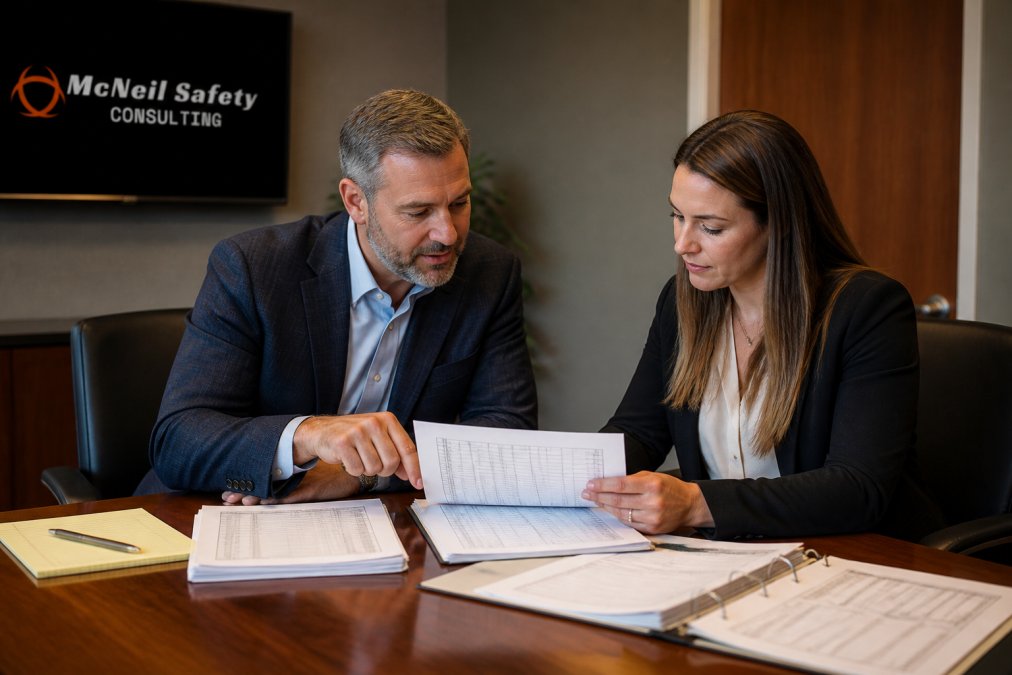
Pull your current IIPP, training logs, incident reports, and written safety plans. If any of these documents do not exist, are outdated, or cannot be located quickly, that gap needs to be addressed before any inspection occurs.
Organizing Compliance Documentation Before the Inspector Arrives
Compliance documentation is the foundation of any successful audit or inspection defense. Auditors and Cal/OSHA inspectors work from documentation first. A facility with excellent physical conditions and no documentation to support them is still exposed.
Organize records into the following categories:
Regulatory programs: Written IIPP, hazard communication program, emergency action plan, and any required program-specific plans such as confined space entry, lockout/tagout, or respiratory protection.
Training records: Employee-specific training logs organized by topic and date, retrievable by employee name and training subject.
Incident documentation: All OSHA 300 logs, incident reports, and near-miss reports for the past three years minimum.
Industrial hygiene records: Air monitoring, noise monitoring, and medical surveillance records must be current and organized.
Equipment and inspection records: Maintenance logs, equipment certifications, and inspection checklists for regulated equipment.
Digital records reduce retrieval time during inspections and reduce the risk of incomplete or misplaced documentation. As noted in OSHA recordkeeping requirements and guidance, employers are required to maintain specific records for defined retention periods, and organized digital systems make compliance more reliable.
For facilities that need to build or rebuild documentation, McNeil Safety Consulting provides full-service safety plan writing, IIPP development, and compliance documentation support. The firm’s credentials, including Registered Environmental Professional, Registered Industrial Hygiene Professional, and Qualified SWPPP Developer designations, cover the regulatory breadth that most California businesses require.
Regulatory enforcement does not wait for a convenient time. Cal/OSHA citations arrive with a 15-day response window, inspections happen without advance notice, and documentation gaps become critical liabilities the moment an inspector walks through the door. The cost of a professional workplace safety audit is predictable and bounded. The cost of non-compliance is neither. McNeil Safety Consulting provides Cal/OSHA compliance support, citation defense, industrial hygiene monitoring, and complete safety program development for California businesses of all sizes. Get a free consultation and find out exactly what your facility needs before the inspector does.
Frequently Asked Questions
Q: What factors influence the cost of a workplace safety audit?
A: Audit pricing depends on facility size, industry risk level, number of employees, the scope of documentation review, and whether the engagement includes hazard identification, industrial hygiene sampling, or citation defense. A small general contractor with 30 employees will have a very different scope than a large manufacturing plant. Because these variables shift the time and expertise required significantly, contact a safety consulting firm directly for an accurate quote rather than relying on generic ranges.
Q: Is a mock OSHA inspection worth the investment for my business?
A: For most California employers, yes. A mock OSHA inspection identifies regulatory violations and documentation gaps before a real Cal/OSHA inspector does. Willful violations under Cal/OSHA can result in substantial penalties, while a proactive audit costs a fraction of that. The inspection also produces a corrective action plan, giving your team a clear path to compliance before penalties are assessed.
Q: How often should a company conduct a formal safety audit?
A: Most safety professionals recommend a formal workplace safety audit at least annually, with additional audits triggered by significant operational changes, new hazardous materials, or after a workplace injury. High-risk industries such as construction and manufacturing often benefit from semi-annual audits. Cal/OSHA's Injury and Illness Prevention Program (IIPP) requirements also mandate periodic workplace hazard analysis, so regular audits directly support that obligation.
Q: What is included in a professional Cal/OSHA compliance audit?
A: A professional Cal/OSHA compliance audit typically covers review of your IIPP, training logs, incident reports, written safety plans, hazard communication programs, and any industry-specific standards applicable to your facility. The auditor will conduct a physical site safety observation, identify regulatory violations, and deliver audit findings with a prioritized corrective action plan. Some firms also include industrial hygiene monitoring and medical surveillance review depending on the facility's risk profile.
This article was written using GrandRanker