
Table of Contents
- What Cal/OSHA Compliance Consulting Actually Does
- The Real Risks of Non-Compliance and Financial Liability
- Common Cal/OSHA Violations for Small Employers
- Cal/OSHA IIPP Requirements for Small Business
- Consulting or DIY: When to Hire or Handle It Yourself
- Calculating ROI: Does Professional Consultation Pay for Itself?
- California Workplace Safety Audit Cost and Value
- The Bottom Line: Is It Worth It?
Last Updated: August 27, 2026
What Cal/OSHA Compliance Consulting Actually Does
Cal/OSHA compliance consulting is the practice of hiring external experts to help your business navigate state workplace safety regulations, develop required safety documentation, and defend against citations. At McNeil Safety Consulting, we work with small to mid-sized California businesses to build and maintain the safety programs that keep operations running legally and safely.
The scope varies widely. Some consultants focus on citation defense within the 15-day response window required by law. Others provide broader support: developing your Injury and Illness Prevention Program (IIPP), conducting hazard assessments, writing safety plans like SWPPP (Stormwater Pollution Prevention Plan) and HASP (Health and Safety Plan) documents, and preparing your team for inspections before violations occur. What makes this different from generic safety training is the specificity, a consultant documents exactly what hazards exist in your operation, writes procedures tailored to your industry and site conditions, and ensures your documentation meets regulatory standards.
The real value emerges when violations occur. Many small business owners face a citation without knowing where to start. Cal/OSHA compliance consulting means having someone who understands the regulatory language, knows which violations are defensible, and can build a response strategy within that critical 15-day window.
The Real Risks of Non-Compliance and Financial Liability
Non-compliance with Cal/OSHA regulations carries consequences that extend far beyond a single fine. Financial liability compounds quickly, and operational disruption often costs more than penalties themselves.
Cal/OSHA violations fall into categories with escalating severity. General violations carry one penalty tier. Serious violations, where the hazard could cause serious injury or death, carry higher penalties (dir.ca.gov). Willful violations, where Cal/OSHA determines you knowingly ignored a safety requirement, result in penalties that are multiples of the base amount. Repeated violations within five years increase costs further.
Beyond direct penalties, non-compliance creates secondary exposure. If a workplace injury occurs and Cal/OSHA determines your safety program was inadequate, workers’ compensation insurance rates increase substantially. Some insurers drop coverage entirely, forcing you into the state-assigned risk pool where premiums are significantly higher. There’s also the operational cost of an unprepared citation response: rush fees, weak submissions that Cal/OSHA rejects, and management time spent on crisis response instead of running the business.
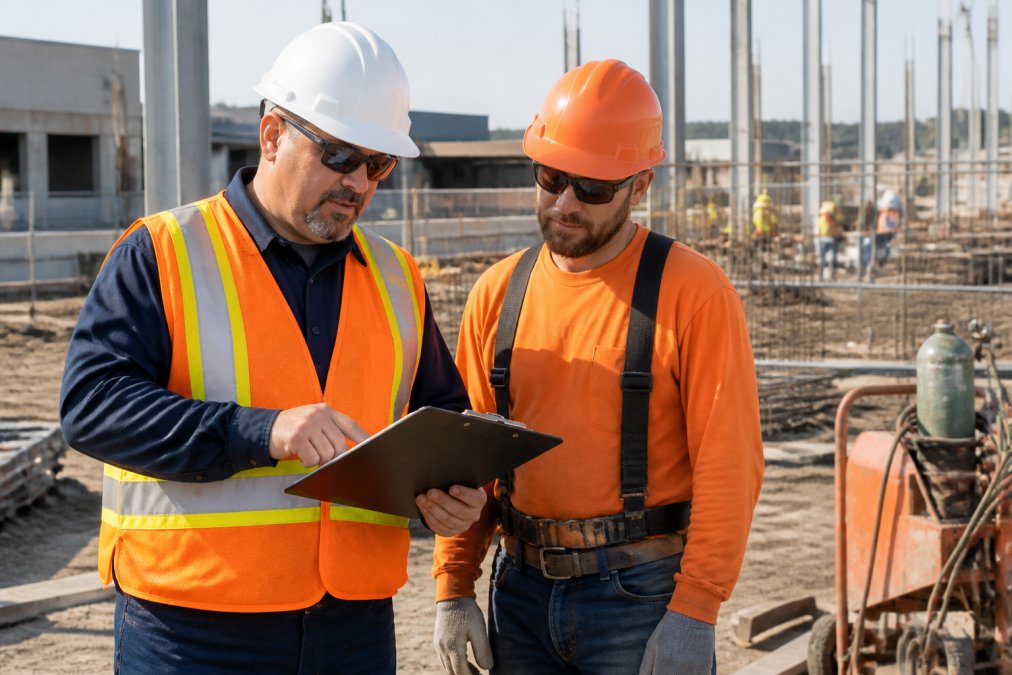
For construction companies and industrial operations, reputational cost matters too. Clients increasingly ask about safety records before awarding work. A pattern of Cal/OSHA violations can disqualify you from bids. The cumulative effect is that one citation, handled poorly, can trigger higher insurance costs, lost business opportunities, and management distraction. Proactive compliance consulting addresses these risks before they materialize.
Common Cal/OSHA Violations for Small Employers
Understanding violations that most often affect small businesses helps you identify gaps in your own operation.
Fall protection violations are among the most common. If your business involves work at heights, Cal/OSHA expects documented fall prevention systems, trained personnel, and regular equipment inspection. Many small operations skip the documentation piece, assuming equipment alone is enough. Cal/OSHA cites the absence of written procedures and training records.
Hazard communication violations occur when chemicals or hazardous materials are present but workers aren’t properly trained on their risks. The violation is often that workers don’t know what they’re exposed to or how to protect themselves.
Recordkeeping violations are surprisingly common. Cal/OSHA requires you to maintain injury and illness logs, and many small businesses either don’t keep them or keep them incorrectly. Inadequate safety training is cited frequently, your team may have received training at some point, but Cal/OSHA expects documented, job-specific training repeated when new hazards are introduced.
Personal protective equipment (PPE) violations occur when required equipment isn’t available, isn’t being worn, or workers haven’t been trained on proper use. Ergonomic hazards in office and warehouse settings are increasingly cited when workstations aren’t set up properly or repetitive tasks lack breaks or job rotation.
The common thread: Cal/OSHA cites the absence of documentation, training, procedures, and evidence that you’ve addressed risk systematically. That’s where Cal/OSHA compliance consulting adds value, it builds the documentation and procedures that demonstrate you’ve identified hazards and taken reasonable steps to control them.
Cal/OSHA IIPP Requirements for Small Business
The Injury and Illness Prevention Program (IIPP) is the foundation of Cal/OSHA compliance. Every California employer with one or more employees must have a written IIPP (dir.ca.gov). For small businesses, this is often the most misunderstood requirement.
Your IIPP isn’t a generic template filed away once. It’s a documented system showing how your business identifies hazards, trains employees, investigates injuries, and corrects problems. Cal/OSHA expects it to be specific to your operation, not copied from another industry.
Required components include: responsibility assignment (who owns safety), hazard identification and assessment (what can go wrong in your workplace), methods to correct hazards, training and instruction tailored to your site, emergency response procedures, and a system for investigating injuries and illnesses. You must maintain records showing these elements are actually being implemented.
For small businesses, the most common gaps appear in hazard assessment and training documentation. You might identify that workers are exposed to dust but haven’t documented what dust, at what levels, or what controls you’ve implemented. You might conduct safety meetings but haven’t kept records showing who attended, what was covered, or how it relates to your actual workplace hazards.
The IIPP also requires you to respond to employee safety concerns. If a worker reports a hazard, you need a documented process for evaluating it and taking corrective action. Many small businesses handle this informally, leaving no record that the concern was addressed, exactly what Cal/OSHA looks for during an inspection.
McNeil Safety Consulting helps small businesses develop IIPPs that are realistic and specific to their operation, focusing on elements that matter most for your industry and site conditions, then helping you maintain the documentation that proves compliance.
Consulting or DIY: When to Hire or Handle It Yourself
The decision to hire a consultant depends on your current compliance status, operation complexity, team expertise, and what happens if you get it wrong.
DIY compliance makes sense if you’re starting from scratch with a simple operation, your team includes someone with safety knowledge, and you have time to invest in learning regulations. Many small businesses successfully maintain basic compliance through internal effort, especially in low-hazard industries.
The DIY approach breaks down in three scenarios. First, when you’ve already received a citation, a 15-day response window doesn’t allow time for learning the regulatory process. Second, when your operation involves regulated hazards: construction, chemical handling, confined spaces, heights, or noise exposure. Documentation requirements are more complex, and mistakes are costly. Third, when your team lacks someone with safety expertise or bandwidth to manage compliance alongside regular duties.
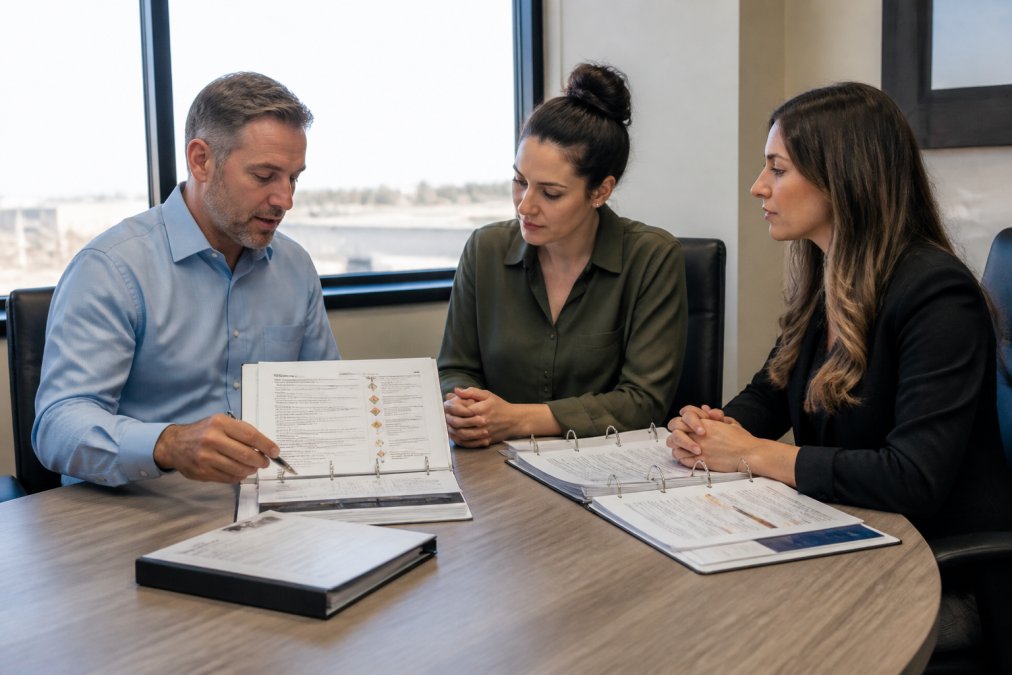
There’s a middle ground: hiring a consultant to build your foundation, then maintaining it internally. A consultant develops your IIPP, hazard assessment, and training materials. Your team then owns ongoing implementation, documentation, and updates. This gives you expertise to get started right without committing to ongoing consulting fees.
When hiring a consultant, look for specific experience with your industry and business size. Ask about their approach to citation defense and track record responding to violations within the required timeline. The cost-benefit analysis depends on what you’d pay to handle a violation response poorly. If you miss the 15-day window or submit a weak response that Cal/OSHA rejects, you’ve lost the opportunity to contest it. If a workplace injury occurs and Cal/OSHA determines your safety program was inadequate, downstream costs, insurance increases, lost business, management time, often exceed what you’d have paid for proactive consulting.
Calculating ROI: Does Professional Consultation Pay for Itself?
The ROI of Cal/OSHA compliance consulting isn’t always obvious because benefits are often preventive. You pay now to avoid problems that might never occur.
Start by quantifying the cost of non-compliance. If you received a violation, what would the penalty be? Add the cost of a rushed response, potential insurance rate increases, and lost business from clients who check safety records. That total is your baseline cost of failure.
Consider the time your management team would spend responding to a violation. If your operations manager spends 40 hours coordinating a response, investigating what went wrong, and submitting documentation, that’s 40 hours not spent on revenue-generating work. For construction companies, the impact is often larger, a general contractor that loses a bid because of unresolved safety violations loses entire project revenue.
The preventive benefit is harder to quantify but real. Consulting that catches hazards before they cause injury prevents workers’ compensation claims, which affect insurance rates for years. It prevents the disruption of a workplace injury investigation and the regulatory attention that follows a serious incident.
A reasonable framework: if the cost of one violation response, penalties plus management time plus potential business impact, exceeds the cost of annual consulting, then consulting is financially defensible. For most small businesses operating in regulated industries, that threshold is crossed quickly.
California Workplace Safety Audit Cost and Value
A workplace safety audit conducted by a qualified consultant identifies current compliance gaps, documents your existing safety efforts, and creates a baseline for improvement.
A comprehensive audit examines your IIPP, hazard assessment procedures, training documentation, incident records, and physical workplace conditions. The consultant interviews key staff, reviews safety documentation, and walks your site to identify hazards. They produce a report detailing gaps, prioritized by risk level, with recommendations for correction.
The value is third-party validation. If Cal/OSHA inspects your business, you can point to documentation showing you’ve systematically identified and addressed hazards. You’re not starting from zero during an inspection, you’ve already done the work. That shifts the burden of proof and strengthens your position if violations are cited.
An audit reveals gaps before Cal/OSHA does. You discover missing training documentation, inadequate hazard controls, and incomplete incident investigation procedures while you still have time to correct them. For small businesses, the audit educates your team about what compliance actually looks like in your operation. That knowledge is valuable whether you continue with the consultant or handle implementation internally.
The value compounds over time. An audit creates documentation that supports your compliance defense if an issue arises later. If an injury occurs and Cal/OSHA investigates, you can show that you’d already identified similar hazards and implemented controls. That evidence of reasonable effort is powerful in regulatory proceedings.
The Bottom Line: Is It Worth It?
Cal/OSHA compliance consulting is worth it for small businesses operating in regulated industries, facing active violations, or lacking internal safety expertise. It’s less essential for simple, low-hazard operations with engaged management and documented procedures already in place.
The decision depends on your specific situation. If you’re in construction, manufacturing, chemical handling, or any operation involving regulated hazards, the risk of citation is high enough that proactive consulting makes financial sense. If you’ve already received a violation, consulting is essential, the 15-day response window leaves no room for learning the process.
The key insight: compliance isn’t binary. You’re choosing between proactive management of compliance (which prevents problems) and reactive management (which responds to violations after they occur). Proactive costs less in the long run.
McNeil Safety Consulting works with small to mid-sized California businesses to build compliance systems that fit their operation and budget. Our approach focuses on the documentation and procedures that matter most for your industry, then helps you maintain them over time. If you’re facing a citation, we respond within your required timeline. If you’re building a compliance foundation, we create systems your team can maintain internally. An initial call is an opportunity to discuss your specific situation and determine what approach makes sense for your business.
Compliance doesn’t have to be overwhelming. The businesses that handle it effectively aren’t necessarily the ones with the biggest safety departments, they’re the ones with clear systems, documented procedures, and expert guidance when they need it. If you’re managing Cal/OSHA compliance for a small business in California, a conversation with an experienced consultant can clarify what’s actually required, what gaps exist in your current approach, and what the realistic path forward looks like. Cal/OSHA’s official guidance on workplace safety programs provides the regulatory framework. McNeil Safety Consulting helps you implement it.
Frequently Asked Questions
Does Cal/OSHA provide free consultation services to small businesses?
Yes. Cal/OSHA operates a free voluntary assistance program that provides on-site consultation to identify hazards and develop safety programs. This service is separate from enforcement and does not result in citations. However, the program has limited availability and longer wait times. For urgent citation responses or complex industrial hygiene needs, private Cal/OSHA compliance consulting fills the gap that free services cannot meet quickly.
What are the most common Cal/OSHA violations for small businesses?
Small employers most frequently face citations for inadequate hazard assessment, missing or incomplete IIPP documentation, improper PPE provision or training, fall protection gaps, and failure to maintain safety records. Many violations stem from unclear regulatory compliance requirements rather than intentional neglect. A compliance consultant can identify these gaps before an inspection and help you correct them, reducing penalty exposure and demonstrating good-faith effort to regulators.
How does an IIPP protect a small business from regulatory fines?
An Injury and Illness Prevention Program documents your written safety policies, hazard assessment procedures, and employee training protocols. When Cal/OSHA inspects, a complete IIPP shows you have a system in place and demonstrates regulatory compliance strategy. If violations occur, a well-documented IIPP can reduce penalty severity because it proves you took preventive steps. Without one, you face automatic citations and higher fines. Professional help ensures your IIPP meets Cal/OSHA requirements and actually protects your business.
Can a consultant really respond to a Cal/OSHA citation within the 15-day deadline?
Yes, experienced consultants can meet tight deadlines because they understand citation language, know which violations are defensible, and have templates for common responses. A 15-day response requires immediate action: gathering evidence, analyzing the violation, and drafting a credible response. In-house staff often lack the regulatory expertise to do this effectively. A consultant with citation defense experience can prioritize correctly, avoid costly mistakes, and submit a response that positions your business for penalty reduction or dismissal.