
Table of Contents
- Why Heat Illness Prevention Matters Under Cal/OSHA
- Develop a Written Cal/OSHA Heat Illness Prevention Plan Template
- Implement California Heat Illness Prevention Training Requirements
- Establish Acclimatization Procedures for New Employees
- Monitor Heat Stress with Workplace Heat Stress Monitoring Tools
- Activate High-Heat Procedures and Active Observation
- Prepare Emergency Response and First Aid Protocols
- Frequently Asked Questions
Last Updated: September 24, 2026
Heat illness kills workers every summer. The risk isn’t limited to outdoor construction sites, it hits warehouses, manufacturing plants, kitchens, and any workplace where temperature, physical exertion, and humidity converge. Cal/OSHA enforces heat illness prevention standards with serious consequences for non-compliance. This guide covers the 7 best practices for Cal/OSHA heat illness prevention that protect your workforce and keep your company out of citation trouble.
Effective heat illness prevention follows a predictable framework combining written planning, employee training, monitoring, and rapid response protocols.
Why Heat Illness Prevention Matters Under Cal/OSHA
Heat illness is preventable. Cal/OSHA Title 8 Section 3395 requires employers to develop and implement a written heat illness prevention plan. The regulation applies to all outdoor workers and indoor workers exposed to significant heat. Violations carry substantial penalties that increase annually.
Heat illness creates operational costs: hospitalization means lost productivity, emergency expenses, workers’ compensation claims, and reputational damage. Workers choose safer employers.
Early recognition of heat exhaustion prevents progression to heat stroke. Cal/OSHA mandates active observation, hydration protocols, and cool-down rest periods to address heat illness before it becomes an emergency.
Heat illness prevention isn’t optional compliance theater, it’s the difference between a functioning workforce and a crisis. The seven practices below form a complete system that satisfies Cal/OSHA requirements while protecting your people.
Develop a Written Cal/OSHA Heat Illness Prevention Plan Template
Every employer subject to Cal/OSHA heat illness prevention must have a written plan that documents how your workplace identifies heat hazards, assigns responsibility, trains workers, and responds to emergencies.
Your heat illness prevention plan template should include these core sections:
- Workplace assessment: Which jobs, locations, and seasons create heat exposure
- Responsibility assignments: Who monitors conditions, who authorizes work modifications, who responds to emergencies
- Hydration and rest protocols: Access to potable drinking water, frequency of cool-down rest periods, location of shade
- High-heat procedures: Triggers for activating enhanced monitoring when heat index exceeds thresholds
- Training requirements: What workers must know and when training occurs
- Emergency response: First aid for heat exhaustion and heat stroke, emergency contact procedures, transportation to medical care
A written plan identifies gaps in current practices and becomes your defense if Cal/OSHA investigates, demonstrating intent and systematic thinking.
Your plan should reflect your actual work environment. A construction company’s heat illness prevention plan differs from a manufacturing facility’s or food service operation’s.
Document your plan. Keep it accessible to supervisors and workers. Review and update it annually or when operations change.
Many employers write a plan and file it away. Instead, use your written plan as a working document. Reference it in pre-shift meetings. Update it when you change work locations or schedules. A plan that guides daily decisions is a plan that prevents illness.
Implement California Heat Illness Prevention Training Requirements
Cal/OSHA requires employers to train all workers exposed to heat on heat illness recognition, prevention, and response.
Your heat illness prevention training must cover:
- Symptoms of heat exhaustion: Heavy sweating, weakness, dizziness, nausea, rapid pulse, fainting
- Symptoms of heat stroke: Confusion, loss of consciousness, hot dry skin, lack of sweating, seizures
- Risk factors: Dehydration, lack of acclimatization, physical exertion, certain medications, prior heat illness
- Prevention measures: Hydration, rest, shade access, gradual acclimatization
- Response procedures: What to do if a worker shows signs of heat illness, how to cool someone down, when to call emergency services
Train new employees before they work in heat, returning employees at the start of hot season, and seasonal workers on day one.
Supervisors need additional training to recognize heat illness symptoms in workers who may not report them, and to understand when to modify work, mandate rest, and call for emergency response.
Document all training. Keep records of who attended, when, and what was covered. This documentation supports your defense if questioned by Cal/OSHA.
A common mistake is conducting training once and assuming it sticks. Heat illness recognition isn’t intuitive, workers often minimize symptoms or push through discomfort. Repeat training annually and reinforce it through pre-shift briefings and posted reminders.
Establish Acclimatization Procedures for New Employees
New workers face the highest heat illness risk because their bodies haven’t adapted to heat exposure and physical exertion. Cal/OSHA requires acclimatization procedures.
Acclimatization means gradually increasing work intensity and heat exposure over time. A worker new to outdoor construction or a warehouse during summer needs a structured ramp-up period.
Your acclimatization procedures should specify:
- Duration: Typically 7-14 days, depending on work intensity and ambient temperature
- Work schedule modifications: Reduced hours or lighter duties during the acclimatization period
- Increased monitoring: More frequent checks on new workers for signs of heat stress
- Hydration emphasis: Extra focus on water intake during the acclimatization phase
- Buddy system: Pairing new workers with experienced employees who watch for problems
Track acclimatization completion for every new hire. This record shows Cal/OSHA that you took deliberate steps to protect them.
Workers returning after extended absence during summer need a brief re-acclimatization period.
Monitor Heat Stress with Workplace Heat Stress Monitoring Tools
Effective heat illness prevention requires monitoring both environmental conditions and worker responses, including how heat degrades worker performance and decision-making before it causes collapse.
Environmental monitoring involves measuring heat index, the combination of temperature and humidity. A 95-degree day with high humidity creates more heat stress than a 95-degree day in dry conditions.
Your environmental monitoring approach should include:
- Heat index tracking: Check the heat index at your work location daily during hot months. Use a thermometer and humidity meter, or reference the National Weather Service heat index forecast for your area
- Threshold triggers: Establish the heat index level that activates your high-heat procedures (often 95 degrees Fahrenheit for outdoor work, lower for strenuous indoor labor)
- Timing and location specificity: Heat index varies across your site, a shaded area reads differently than direct sun, an indoor warehouse differs from outdoor exposure. Monitor the actual work zones, not just a single reference point
Environmental data alone misses the human element. Heat stress causes cognitive decline before physical collapse: slower reaction times, reduced attention span, impaired judgment, and increased error rates. A supervisor or equipment operator becomes a safety risk long before they feel ill.
Your active observation protocol must track behavioral and cognitive signs of heat stress: slowed movements, reduced communication, irritability, loss of focus, cessation of sweating, and confusion or difficulty following instructions.
Active observation means watching for behavioral changes, checking in verbally, and being alert to workers who minimize symptoms. A worker who says “I’m fine” while moving slowly and making errors is not fine.
Implement a structured observation routine: hourly check-ins during high-heat conditions, peer observation training, and documented observations of heat stress signs and actions taken.
Document daily heat index readings, work modifications, and worker observations. This demonstrates active risk management, not reactive response.
Heat index monitoring transforms heat illness prevention from a theoretical exercise into practical daily management. When supervisors check the heat index each morning, adjust work accordingly, and actively watch for cognitive and behavioral changes in workers, heat illness rates drop significantly. The goal is to catch heat stress at the stage where rest and hydration reverse it, before it progresses to heat exhaustion or heat stroke.
Activate High-Heat Procedures and Active Observation
When heat index reaches your predetermined threshold, activate high-heat procedures.
High-heat procedures typically include:
- Increased rest frequency: Cool-down rest periods every hour instead of every two hours
- Extended shade time: Workers spend more time in shaded or air-conditioned areas
- Mandatory buddy checks: Supervisors conduct more frequent checks on each worker
- Reduced work intensity: Lighten physical demands or reduce shift length
- Enhanced hydration: Make water more accessible and encourage more frequent drinking
- Pre-shift briefing: Brief workers on heat risk and prevention measures before starting work
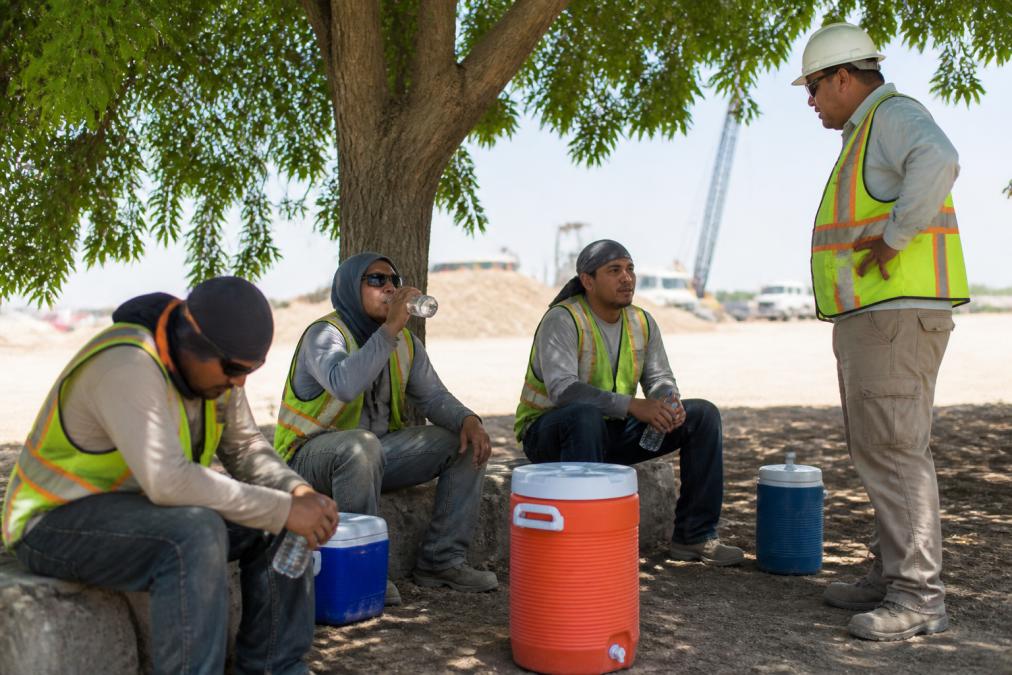
Active observation is the centerpiece of high-heat procedures.
Prepare Emergency Response and First Aid Protocols
Despite prevention efforts, heat illness can still occur. Your emergency response protocol determines whether someone receives life-saving care quickly and affects your workforce, insurance costs, regulatory standing, and operations.
Incident documentation should include:
- Date, time, and location of the incident
- Worker name and job title
- Environmental conditions at the time (heat index, work being performed, duration of exposure)
- Symptoms observed and timeline of symptom progression
- Response actions taken (who was notified, what cooling measures were applied, when emergency services were called)
- Medical outcome (did the worker recover on site, was emergency transport necessary, was hospitalization required)
- Follow-up actions (medical evaluation, return-to-work timeline, any plan modifications made in response)
Emergency response is your safety net, but prevention is your strategy. A well-designed heat illness prevention program prevents most incidents from occurring. When incidents do occur despite prevention efforts, a clear emergency protocol ensures rapid response and recovery. The combination of prevention and preparedness protects your workers, your operations, and your bottom line.
Frequently Asked Questions
What are the core requirements of the Cal/OSHA heat illness prevention standard?
Cal/OSHA requires employers to provide potable drinking water, access to shade and cool-down rest periods, a written heat illness prevention plan, and employee training on heat illness symptoms and emergency response. High-heat procedures must activate when temperatures exceed 95°F outdoors or when indoor heat index reaches the employer’s established threshold. Supervisors must conduct active observation of workers for signs of heat-related illness, and first aid must be immediately available.
How do acclimatization procedures for new employees reduce heat illness risk?
New employees and those returning after extended absence require gradual exposure to heat over time. This allows the body to develop physiological adaptations and reduces heat exhaustion and heat stroke risk. Supervisors must monitor acclimatizing workers closely and modify workload if symptoms appear.
What triggers high-heat procedures under Cal/OSHA regulations?
High-heat procedures activate when outdoor temperatures reach 95°F or higher, or when indoor environments reach the heat index threshold your written prevention plan establishes. Triggers may vary by industry and location. Once activated, mandatory measures include increased hydration, mandatory cool-down rest periods in shade, closer active observation by supervisors, and a buddy system to monitor for heat illness symptoms. Pre-shift meetings must brief workers on the day’s heat risk.
How often must heat illness prevention training be provided to employees?
All employees must receive heat illness prevention training before working in heat conditions. Refresher training is required annually and whenever new employees join roles involving heat exposure. Training must cover heat illness symptoms, prevention measures, hydration protocols, the importance of shade and cool-down rest periods, acclimatization procedures, and emergency response steps. Documentation of training completion is required for Cal/OSHA compliance verification.