
Table of Contents
- What Is an IIPP and Why It Matters in 2026
- The 8 Required Elements of an IIPP
- Cal/OSHA IIPP Template: Building Your Written Safety Plan
- Who Must Have an IIPP Under Title 8 §3203
- IIPP Training Requirements and Documentation
- Workplace Safety Audit Cost and Preparation
- Remote and Hybrid Work IIPP Adaptations
- IIPP Audit Preparation and Compliance Defense
Last Updated: August 28, 2026
What Is an IIPP and Why It Matters in 2026
An Injury and Illness Prevention Program (IIPP) is a written safety plan that identifies workplace hazards, establishes control procedures, and ensures employee participation in maintaining a safe work environment. Title 8 §3203 of the California Code of Regulations mandates that most employers maintain a written IIPP (dir.ca.gov). This is your legal foundation for workplace safety and primary defense when Cal/OSHA inspectors arrive.
McNeil Safety Consulting provides IIPP and written safety program development, Cal/OSHA safety audits and Cal/OSHA citation defense for employers in California and the Western states. Call (626) 546-9384 or request a consultation.
Cal/OSHA enforcement has intensified in 2026. Citations for missing or inadequate IIPP compliance carry substantial penalties, and the 15-day response window leaves no room for delay. A well-constructed IIPP protects your workforce, reduces incident rates, and demonstrates due diligence if an accident occurs.
The 8 Required Elements of an IIPP
Cal/OSHA Title 8 §3203 specifies eight mandatory components. Missing even one element creates a citation vulnerability.

1. Management Commitment and Responsibility
Your written IIPP must clearly assign responsibility for the program, typically naming a safety manager or designee.
2. Hazard Assessment and Control
Systematically identify hazards specific to your workplace, evaluate their severity, and document control measures. For a construction site, this means identifying fall hazards, equipment operation risks, and material handling exposure. The assessment must be documented and updated when operations change.
3. Employee Training and Communication
Employees must receive training on workplace hazards relevant to their job duties and the controls in place. Training must be documented with dates, attendees, and topics covered. Communication protocols ensure that new hazards or changes reach affected workers promptly.
4. Accident Investigation and Recordkeeping
When an injury or illness occurs, investigate the root cause and document corrective actions. Cal/OSHA Form 301 (Injury and Illness Incident Report) must be completed and retained for five years (osha.gov).
5. Hazard Correction and Control Implementation
Identified hazards must be corrected or controlled with timelines based on severity. Documentation must show what was corrected, when, and by whom.
6. Medical Surveillance and Occupational Health
For workplaces with specific exposure risks (chemical, biological, or physical), medical surveillance may be required. McNeil Safety Consulting’s on-staff licensed LVN infection preventionist can help determine whether your operations trigger medical surveillance obligations and design appropriate protocols.
7. Regulatory Compliance and Standards
Your IIPP must address applicable Cal/OSHA standards and industry-specific regulations. Construction sites must address fall protection, electrical safety, and equipment operation standards. Your written plan must reference the specific standards that apply to your operations.
8. Program Review and Maintenance
Review your IIPP at least annually, update it when operations change, and adjust it based on incident investigation findings. Documentation of these reviews demonstrates ongoing commitment.
| Element | Purpose | Documentation Required |
|---|---|---|
| Management Commitment | Assigns accountability | Written designation of responsible party |
| Hazard Assessment | Identifies workplace risks | Hazard inventory with control measures |
| Employee Training | Ensures worker knowledge | Training logs with dates and topics |
| Accident Investigation | Analyzes incidents | Cal/OSHA Form 301 and root cause reports |
| Hazard Correction | Controls identified risks | Corrective action records with timelines |
| Medical Surveillance | Monitors occupational health | Health assessment records (if applicable) |
| Regulatory Compliance | Addresses applicable standards | Reference to Title 8 and industry standards |
| Program Review | Maintains effectiveness | Annual review documentation |
Cal/OSHA IIPP Template: Building Your Written Safety Plan
A written IIPP must be specific to your operations. Generic templates miss the mark because they don’t address your actual hazards.
Section 1: Statement of Policy
Begin with a clear statement that management is committed to providing a safe workplace and that all employees share responsibility for safety.
Section 2: Hazard Identification and Assessment
Document every hazard specific to your workplace. For a construction site, this includes fall hazards, electrical exposure, equipment operation, material handling, and weather-related risks. The assessment should note the severity of each hazard and the population at risk.
Section 3: Hazard Control Procedures
For each identified hazard, specify the control method. Controls follow a hierarchy: elimination, substitution, engineering controls, administrative controls, and personal protective equipment (PPE) (the CDC). Your plan should explain which control applies to each hazard and how it will be implemented.
Section 4: Training and Communication Plan
Outline what training employees receive, when, and how. Include initial onboarding training, job-specific hazard training, and refresher training. Document the method of communication for new hazards or procedure changes.
Section 5: Accident Investigation Procedures
Describe how incidents will be investigated, who is responsible, and what documentation is required. Specify the timeline for investigation and how findings will be communicated to affected employees.
Section 6: Medical Surveillance (if applicable)
If your operations require medical monitoring, detail the baseline assessment process, periodic evaluation schedule, and post-exposure protocols.
Section 7: Program Review Schedule
Document that the program will be reviewed at least annually, after significant incidents, and when operations change.
Section 8: Appendices
Include hazard-specific procedures, training logs, incident investigation forms, and regulatory references. Generic language like "we follow all applicable standards" doesn’t satisfy Cal/OSHA. Inspectors look for specificity: "We use fall protection systems rated for 5,000 pounds at heights exceeding 6 feet" is far more defensible.
Who Must Have an IIPP Under Title 8 §3203
Title 8 §3203 applies to most California employers with employees in the state. Employers required to have an IIPP include construction companies, manufacturing facilities, retail and hospitality businesses, healthcare and medical facilities, educational institutions, government agencies, professional services companies, transportation and logistics operations, and agricultural operations.
Employers with fewer than 11 employees may use a simpler written program in some cases, but core requirements still apply. Even very small businesses need documented hazard assessment, employee training, and accident investigation procedures.
Construction sites must address fall protection, excavation safety, and equipment operation. Healthcare facilities must address bloodborne pathogens and ergonomic hazards. Manufacturing operations must address machine guarding and chemical safety. Your IIPP must be tailored to your specific industry and operations. The key question: Does your business have employees performing work that could result in injury or illness? If yes, you need an IIPP.
IIPP Training Requirements and Documentation
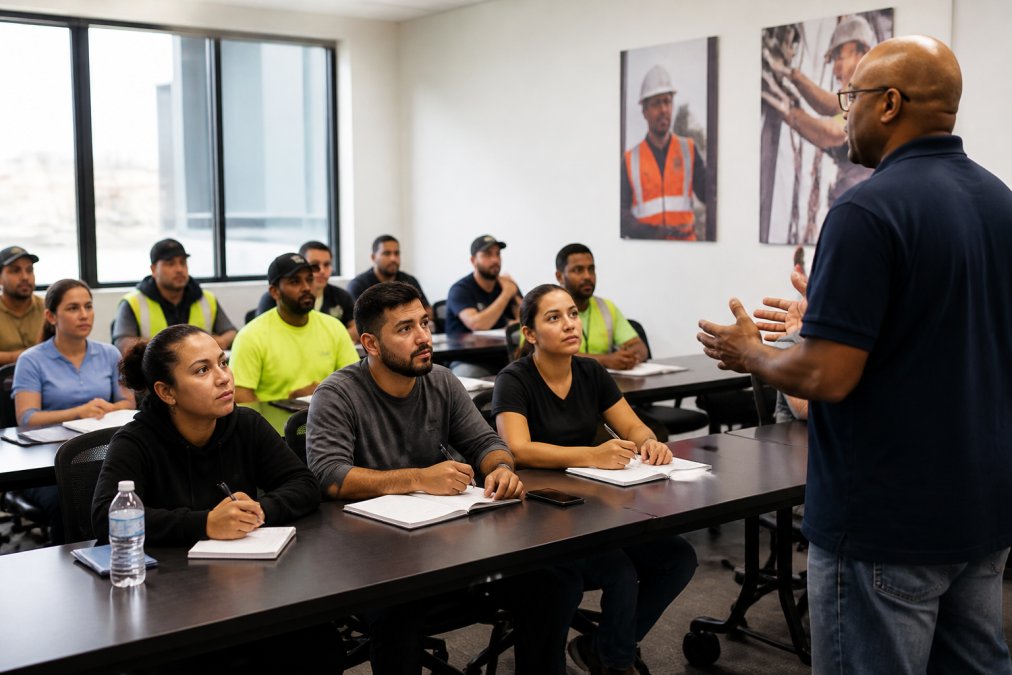
Employee training is where many IIPP programs fail during inspection. Cal/OSHA expects documented evidence that employees understand the hazards they face and the controls in place.
Initial Hazard Training
New employees must receive training on workplace hazards and control procedures before beginning work. This training should be job-specific. Documentation must include the date, attendees, topics covered, and trainer name.
Job-Specific Training
Employees must understand hazards specific to their role. A forklift operator needs training on equipment operation, load capacity, and pedestrian safety. A construction worker needs training on fall protection, equipment use, and site-specific hazards. This training must be documented and refreshed when procedures change.
Hazard Communication Training
If your workplace uses hazardous chemicals, employees must understand the hazard communication standard, how to read safety data sheets, and what to do in case of exposure.
Refresher Training and Documentation
Training is not a one-time event. Refresher training should occur annually or when procedures change. Training records must include the date, attendees, topics covered, trainer credentials, and employee acknowledgment. Digital records are acceptable and often easier to maintain. Your documentation should show that employees received training on hazards relevant to their job duties, not generic "safety training."
Workplace Safety Audit and Preparation
A workplace safety audit evaluates whether your IIPP is effective and compliant with Cal/OSHA standards. Internal audits using checklists aligned with Title 8 §3203 requirements are useful for ongoing monitoring, but a qualified industrial hygienist or safety professional should conduct an external audit for objective assessment.
A comprehensive audit covers review of written IIPP documentation, workplace hazard assessment verification, training records and employee interviews, accident investigation procedures and records, equipment maintenance and inspection logs, regulatory compliance assessment, and recommendations for corrective actions.
Before scheduling an audit, gather your IIPP documentation, training records, incident investigation files, and equipment maintenance logs. Organize these materials chronologically and by department. Walk the workplace and note any visible hazards or non-compliance issues. A professional audit produces a report identifying gaps, non-compliance issues, and recommendations. Prioritize corrective actions by severity and regulatory requirement and document all corrective actions taken.
Remote and Hybrid Work IIPP Adaptations
Remote and hybrid work arrangements create new challenges for IIPP compliance. Your written safety plan must address these environments.
Remote workers face different hazards than office-based employees. Ergonomic issues become more pronounced when employees set up home offices without proper equipment. Your IIPP must identify these hazards and establish controls including ergonomic assessments for remote workers and clear communication protocols for hazard updates.
Training remote employees requires different methods than in-person training. Virtual training sessions, recorded safety modules, and written documentation become more critical. Your documentation must show that remote employees received training and understood the material. Remote workers may use personal equipment or home office setups that don’t meet workplace standards. Your IIPP should establish minimum standards for home office ergonomics, equipment safety, and emergency procedures.
Distributed teams require clear communication channels for hazard updates, procedure changes, and incident reporting. Your IIPP should specify how remote employees will be informed of hazards and changes to procedures.
IIPP Audit Preparation and Compliance Defense
When Cal/OSHA schedules an inspection or you receive a citation, your IIPP becomes your primary defense.
Pre-Inspection Preparation
If you receive notice of a Cal/OSHA inspection, immediately gather your IIPP documentation, training records, incident investigation files, and equipment maintenance logs. Organize these materials so they can be produced quickly. Brief your management team and safety personnel on the inspection process. Walk the workplace and note any visible hazards or non-compliance issues. If you identify problems, address them immediately if possible and document corrective actions taken.
During the Inspection
Cal/OSHA inspectors typically follow a standard process: opening conference, workplace walk-around, document review, and closing conference. During the walk-around, the inspector will ask employees about hazards and safety procedures. Brief your employees in advance and encourage honest responses. During the document review, produce your IIPP, training records, and incident investigation files. Be prepared to explain your hazard assessment process and how you identified and controlled specific hazards.
Citation Response
If you receive a citation, you have 15 days to respond. A well-constructed response backed by documentation can result in citation withdrawal or significant penalty reduction. Your response should address each alleged violation specifically. If the citation claims your IIPP is inadequate, reference the specific elements of your written plan that address the alleged deficiency. If the citation claims you failed to train employees, produce training records demonstrating that training occurred. If the citation claims you failed to correct a hazard, document the corrective action taken and when it was completed.
McNeil Safety Consulting provides support for Cal/OSHA citations by constructing responses that demonstrate compliance or mitigating factors. The 15-day window is tight, but it’s sufficient time to develop a strong defense when you have professional support.
Long-Term Compliance Strategy
Beyond defending a specific citation, develop a long-term strategy for maintaining IIPP compliance. This includes regular internal audits, employee training refreshers, and periodic review of your written plan. Documentation of these activities demonstrates your ongoing commitment to safety and strengthens your position if future inspections occur.
Keep all IIPP documentation organized and accessible. When Cal/OSHA inspectors arrive, your ability to quickly produce training records, hazard assessments, and incident investigations demonstrates that safety is genuinely embedded in your operations.
A common mistake is treating the IIPP as a compliance checkbox rather than a living document. When operations change, procedures evolve, or incidents occur, your written plan must be updated. Inspectors can see when your IIPP hasn’t been reviewed in years, and that signals that safety isn’t actively managed in your organization.
Developing and maintaining an effective IIPP requires understanding both the regulatory requirements and the practical realities of your workplace. The eight required elements provide the framework, but implementation demands specificity, documentation, and genuine commitment to hazard control. McNeil Safety Consulting helps California businesses translate Title 8 §3203 requirements into working safety programs that protect employees and defend against regulatory enforcement. Our team includes Zennin Sedacey-McNeil, a licensed LVN infection preventionist, who provides onsite safety and health expertise for construction sites and other operations. We also provide SWPPP plans, AQMD plans, HMMP and HASP plans including IIPP obligations in California, BESS environmental compliance plans for the entire USA, oil and gas mining compliance plans, hazardous materials management plans, and full phase 1 and 2 environmental compliance plans. If you’re facing a Cal/OSHA citation, preparing for an inspection, or building a safety program from scratch, expert guidance ensures you meet compliance requirements while creating a safer workplace. Contact us to discuss your specific IIPP needs and how to strengthen your compliance position.
Frequently Asked Questions
Q: Is an IIPP mandatory for all California employers?
A: Yes. Title 8 §3203 requires all employers in California to establish, implement, and maintain a written Injury and Illness Prevention Program. There are no exemptions based on company size or industry. Even small businesses with just a few employees must have a compliant IIPP in place. Failure to maintain one results in Cal/OSHA violations and potential citations.
Q: What are the core components of a compliant IIPP?
A: A compliant IIPP must include eight required elements: responsibility assignment, hazard assessment and control, employee training and communication, accident investigation procedures, recordkeeping and documentation, corrective action implementation, safety committee formation, and annual review and updates. Each element must be documented in writing and actively maintained. Missing or incomplete elements create compliance gaps that Cal/OSHA inspectors will identify during audits.
Q: How often should an IIPP be reviewed and updated?
A: Cal/OSHA requires at least an annual review and update of your IIPP. However, you must also update it whenever workplace conditions change, new hazards are identified, new equipment is introduced, or after an accident or near-miss incident. Many organizations benefit from quarterly reviews to catch emerging risks early. Digital recordkeeping software can track changes and flag outdated sections automatically.
Q: What happens if we fail a Cal/OSHA inspection or receive a citation?
A: A Cal/OSHA citation typically includes a 15-day response window. You must either correct the violation, contest it, or request an informal conference with the inspector. Failure to respond within 15 days results in automatic penalty assessment. Professional citation defense support can help you understand the violation, document corrective actions, and present a strong response that may reduce or eliminate penalties.
Q: Do we need professional help to create and maintain our IIPP?
A: While small businesses can draft a basic IIPP using templates, professional support ensures your program meets all Title 8 §3203 requirements and reflects your specific workplace hazards. Consultants with industrial hygiene credentials can identify risks you might miss, create industry-specific hazard assessments, and prepare you for inspections. This is especially critical if you've received a citation or work in high-hazard industries.
Q: What is the difference between Cal/OSHA and federal OSHA standards?
A: California has its own occupational safety and health program, which is generally considered more stringent than federal OSHA standards. Cal/OSHA enforces Title 8 regulations, which often include additional requirements beyond federal rules. If federal and state standards conflict, the stricter standard applies. Employers in California must comply with Cal/OSHA requirements, not federal OSHA alone.
Q: How does digital recordkeeping software help with IIPP compliance?
A: Digital platforms streamline hazard tracking, training documentation, accident reporting, and corrective action follow-up. They provide audit trails, automated reminders for annual reviews, and centralized access to all required records. This reduces manual errors, ensures consistency across multiple locations, and makes it easier to demonstrate compliance during inspections. Many platforms integrate with existing HR systems for seamless data management.