Table of Contents
- What Is a Stormwater Pollution Prevention Plan (SWPPP)?
- Who Needs a SWPPP Under the California Construction General Permit?
- Understanding SWPPP Risk Level Assessment
- QSD SWPPP Requirements and Developer Responsibilities
- Best Management Practices for Construction Sites
- How to Develop Your SWPPP: Step-by-Step Process
- Common SWPPP Compliance Mistakes and How to Avoid Them
- Digital SWPPP Management and Cost-Saving Strategies
- Frequently Asked Questions
Last Updated: September 2, 2026
What Is a Stormwater Pollution Prevention Plan (SWPPP)?
A Stormwater Pollution Prevention Plan (SWPPP) is a site-specific document that identifies potential sources of stormwater pollution and describes the best management practices and control measures a construction project will implement to prevent pollutants from entering surface waters. For construction projects in California, the SWPPP is a regulatory requirement under the California Construction General Permit (CGP), which implements the federal Clean Water Act’s National Pollutant Discharge Elimination System (NPDES) program.
The plan serves as your operational roadmap, detailing everything from sediment control measures to erosion prevention tactics to non-stormwater discharge protocols. A site-specific plan grounded in actual site conditions, realistic construction sequencing, and enforceable best management practices protects your project and your liability exposure.
The most common mistake is treating SWPPP development as a checkbox task. Regulators and inspectors can tell the difference between a thoughtfully developed plan and one generated from a template. Specificity matters for both compliance and operational clarity on your job site.
Who Needs a SWPPP Under the California Construction General Permit?
Most construction projects in California require a SWPPP if they disturb one or more acres of soil, or if they are part of a larger common plan of development that will ultimately disturb one or more acres. This includes grading, excavation, filling, road construction, utility installation, building demolition, and site preparation activities.
The threshold is lower than many contractors expect. A single-family home renovation with grading can trigger the requirement. Projects smaller than one acre may still require a SWPPP if they are part of a larger development or if local jurisdictions impose additional requirements. The safest approach is to assume your project needs one unless you’ve verified otherwise through your local building or grading permit office.
The Notice of Intent (NOI) filing with the state triggers your compliance obligations. Until that NOI is approved and you receive authorization to proceed, you cannot legally begin ground-disturbing activities.
Understanding SWPPP Risk Level Assessment
The California Construction General Permit classifies projects into three risk levels based on project characteristics, site conditions, and proximity to sensitive water bodies. Your risk level determines the complexity of your SWPPP, the qualifications required for the Qualified SWPPP Developer (QSD) who prepares it, and the inspection and monitoring frequency mandated throughout construction.
Risk level assessment is not subjective. The CGP provides specific criteria, and getting this determination wrong at the outset creates cascading compliance problems downstream.
Risk Level 1, 2, and 3 Criteria
Risk Level 1 applies to small, low-complexity projects with minimal site disturbance and no proximity to sensitive waters. Risk Level 1 projects still require a SWPPP, but the plan can be simpler and monitoring requirements are less stringent.
Risk Level 2 covers the majority of California construction projects. These are moderate-complexity projects with typical site disturbance, some grading or excavation, and potential for stormwater runoff to reach surface waters. Most commercial development, multi-family residential projects, and infrastructure work falls into this category.
Risk Level 3 applies to projects with high potential for pollution or significant environmental sensitivity. These include projects on steep slopes, projects with hazardous materials on site, projects discharging directly to sensitive waters, linear projects exceeding certain lengths, and projects in areas designated as impaired water bodies.
Your risk level determines your entire compliance posture. Misclassifying a project as lower risk than it actually is creates an inadequate SWPPP and opens you to citations. Classify conservatively when in doubt.
QSD SWPPP Requirements and Developer Responsibilities
A Qualified SWPPP Developer (QSD) is an individual with specific training, experience, and credentials who prepares the SWPPP. The QSD must have completed formal training in stormwater pollution prevention and the CGP, must have experience developing SWPPPs, and must meet the prerequisites of the 2022 Construction General Permit (Order 2022-0057-DWQ, Section V.F.5). A licensed professional engineer or geologist may self-certify eligibility; anyone else must hold one of the prerequisite certifications listed in the permit or complete an approved course of at least 24 contact hours, and then pass the State Water Board QSD training and exam.
The QSD must conduct a thorough site assessment, evaluate site-specific conditions including topography, soil type, proximity to water bodies, existing drainage patterns, and planned construction activities. The QSD must then select and specify best management practices tailored to those conditions.
The QSD is responsible for ensuring the SWPPP addresses all required elements: sediment and erosion control measures, non-stormwater discharge prevention, pollution prevention for materials and waste, inspection and maintenance protocols, and training requirements for site personnel. The QSD must certify the SWPPP and sign the Notice of Intent, taking professional responsibility for the plan’s adequacy.
McNeil Safety Consulting supports SWPPP work with site assessment, plan development, regulatory filing, and ongoing support through construction. Michael Karl McNeil holds QSD credentials and has guided projects across California and nationwide through the entire SWPPP development and compliance process.
Best Management Practices for Construction Sites
Best Management Practices (BMPs) are the specific control measures and techniques that prevent stormwater pollution. They range from physical structures like sediment barriers and silt fences to operational practices like material storage protocols and waste management procedures. Effective SWPPP development means selecting BMPs matched to your specific site conditions and construction activities.
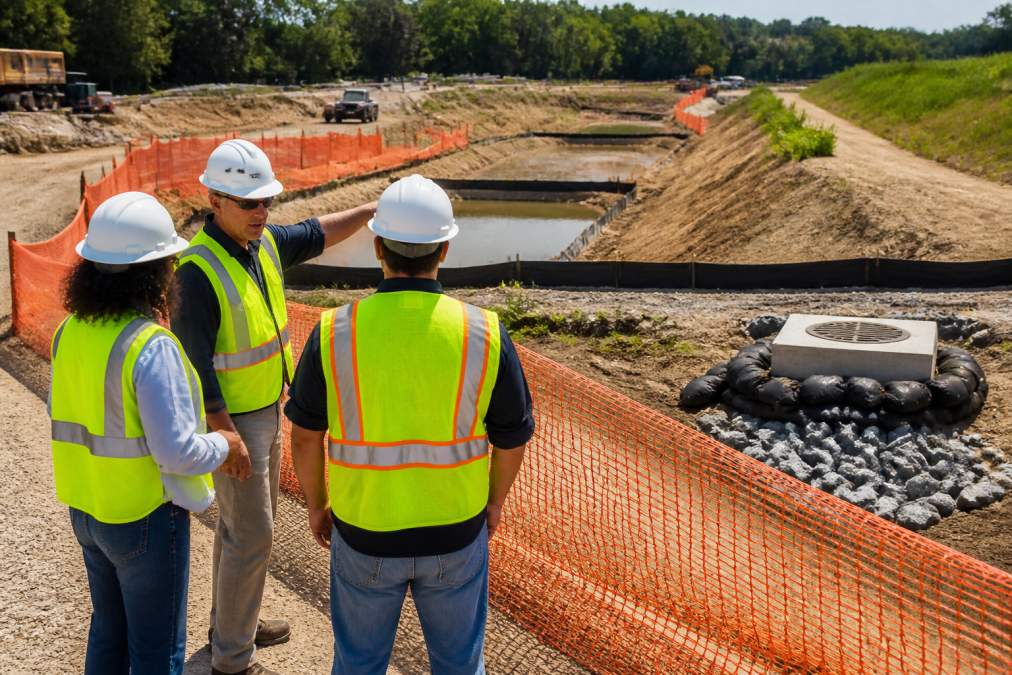
BMPs fall into two broad categories: structural controls that physically prevent pollutants from leaving the site, and non-structural controls that reduce the generation of pollutants in the first place.
Sediment and Erosion Control Measures
Sediment control BMPs prevent soil particles from entering stormwater. Silt fences are fabric barriers installed along the downslope perimeter of disturbed areas to filter stormwater runoff and trap sediment. Sediment retention basins are excavated areas designed to collect stormwater runoff and allow sediment to settle before discharge.
Erosion control measures prevent soil from eroding in the first place. Stabilizing exposed soil with dust control products, hydraulic mulch, or temporary vegetation slows erosion. Protecting slopes with erosion control blankets prevents rain from directly impacting bare soil. Controlling stormwater velocity with check dams, level spreaders, and outlet protection devices reduces erosive force.
Inlet protection prevents sediment from entering storm drain systems. Catch basin inserts, curb inlet sediment filters, and drain inlet sediment filters are simple to install and maintain, and they’re often overlooked despite being highly effective.
Non-Stormwater Discharge and Pollution Prevention
Not all water leaving a construction site is stormwater. Non-stormwater discharges include concrete washout water, equipment washout, dust control water, and dewatering from excavations. These discharges can contain high concentrations of pollutants and must be managed separately from stormwater.
The SWPPP must identify all anticipated non-stormwater discharges and specify how each will be managed. Concrete washout must occur in designated areas with sediment capture and settling. Equipment washout must use wash racks with containment and treatment. Dewatering water must pass through filtration or treatment before discharge.
Pollution prevention practices address the generation of pollutants on site. Proper storage of materials, fuel, oils, paints, and solvents prevents spills and leaks. Secondary containment for hazardous materials prevents environmental contamination. Waste management protocols prevent litter and debris from entering stormwater. Training site personnel on BMP implementation ensures consistent execution.
One of the most cited SWPPP violations is inadequate non-stormwater discharge management. Contractors often focus on sediment control and overlook concrete washout, equipment cleaning, and dewatering. These discharges are visible to inspectors and regulators, and violations here are easy to document and cite.
How to Develop Your SWPPP: Step-by-Step Process
SWPPP development follows a logical sequence: site assessment and risk determination, plan development and BMP selection, documentation and regulatory filing, and implementation with ongoing monitoring.
Step 1: Conduct Site Assessment and Risk Determination
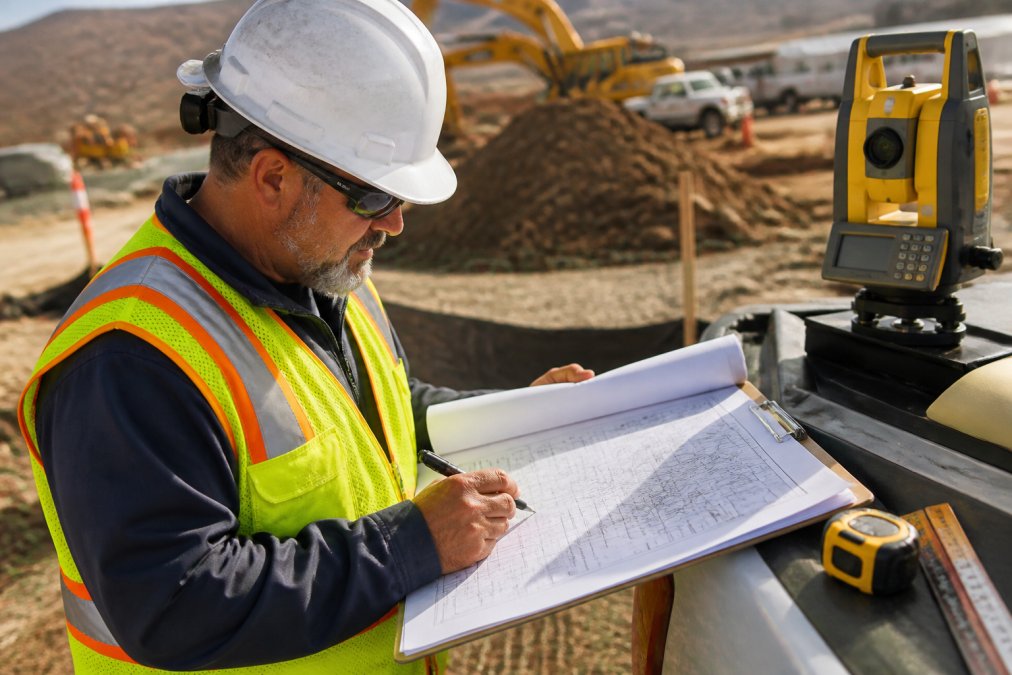
Walk the site and document topography, slopes, soil type, existing drainage patterns, vegetation, and proximity to surface waters. Note the location of utilities, existing structures, and planned grading. Identify sensitive water bodies within or adjacent to the site.
Evaluate the construction activities planned. What will be graded? How deep will excavation go? Where will materials be stored? How long will the project take? This information determines the complexity of the SWPPP and the BMPs required.
Determine the risk level using the CGP criteria. Is the project within a mile of sensitive waters? Will discharge occur directly to a water body? Is the site on steep slopes? The answers place the project into Risk Level 1, 2, or 3.
Step 2: Prepare Site-Specific Plan and BMP Selection
With site conditions and risk level determined, develop the site-specific SWPPP. Start with a site map showing the area of disturbance, existing drainage patterns, proposed grading, and planned BMP locations.
Select BMPs matched to your site. For a project with steep slopes and proximity to a stream, erosion control and sediment retention will be primary concerns. For a project on flat terrain away from water bodies, dust control and material storage management may be adequate.
Specify each BMP in detail. Don’t just list “silt fence”, specify the type, installation depth, spacing, maintenance frequency, and inspection protocol. Specificity prevents misunderstanding on the job site and demonstrates to regulators that you’ve thought through the details.
Step 3: Document Controls and Submit Notice of Intent
The SWPPP document must include all required elements: the site map, BMP specifications, inspection and maintenance protocols, training procedures, and procedures for responding to rain events. The document must address all potential pollution sources and all anticipated non-stormwater discharges.
The Notice of Intent (NOI) is the formal filing that triggers regulatory authorization. The NOI includes the SWPPP, the site map, the risk level determination, the QSD signature, and the applicant’s certification. The NOI is filed with the California State Water Resources Control Board through the SMARTS database.
Do not begin construction until the NOI is approved and you receive authorization to proceed.
Step 4: Implement Monitoring and Maintenance Schedule
Once construction begins, the SWPPP shifts from a planning document to an operational guide. The Qualified SWPPP Practitioner (QSP) must conduct regular inspections, weekly for Risk Level 2 and 3 projects, or more frequently during rain events. Inspections verify that BMPs are installed correctly, maintained properly, and functioning as intended.
The inspection reports document what was observed, what BMPs need maintenance or repair, what corrective actions were taken, and any non-compliance issues. Maintenance is continuous. Silt fences degrade and need replacement. Sediment basins fill with sediment and need cleanout. A SWPPP that’s not maintained is not effective.
Common SWPPP Compliance Mistakes and How to Avoid Them
The most frequent SWPPP violations fall into predictable categories. The first is inadequate site assessment at the outset. Contractors sometimes skip the detailed site evaluation and jump straight to a template SWPPP, resulting in a plan that doesn’t reflect actual site conditions.
The second is misclassification of risk level. Projects are sometimes classified as lower risk than they actually are, resulting in an insufficiently rigorous SWPPP and inadequate monitoring.
The third is poor BMP installation and maintenance. BMPs installed incorrectly don’t function. A silt fence installed too shallow or not properly trenched won’t capture sediment. Installation quality and ongoing maintenance determine whether your BMPs actually prevent pollution.
The fourth is inadequate non-stormwater discharge management. Concrete washout, equipment cleaning, and dewatering are often treated as afterthoughts rather than planned, controlled activities.
The fifth is inadequate training and communication. Site personnel don’t understand their responsibilities or how to implement BMPs correctly. Regular toolbox talks, clear signage, and hands-on supervision prevent this.
The sixth is failure to amend the SWPPP when conditions change. If site conditions differ from what was anticipated or if construction sequencing changes, the SWPPP must be amended.
Audit your SWPPP implementation monthly. Walk the site, compare what’s actually happening to what the plan specifies, and document any gaps. Correcting problems early is far less costly than responding to a regulatory citation.
Digital SWPPP Management and Cost-Saving Strategies
Digital SWPPP management tools have emerged as practical solutions for tracking inspections, managing maintenance schedules, documenting corrective actions, and maintaining compliance records. These tools reduce paperwork, improve consistency, and create an audit trail that demonstrates compliance.
Many digital platforms allow QSPs to conduct inspections using mobile devices, photograph BMP conditions, record observations, and generate inspection reports automatically. The data is centralized and searchable, making it easy to demonstrate compliance to regulators.
For cost-conscious contractors, several strategies reduce SWPPP expenses without compromising compliance. Right-size your BMPs based on actual site runoff and sediment load calculations. Choose BMPs with lower maintenance requirements where appropriate. Sequence construction to minimize the duration of exposed soil. Invest in training and communication so a well-trained crew implements BMPs correctly the first time. Use the SMARTS database to track your project status and compliance history.
SWPPP development for California construction is not a one-time compliance task, it’s an ongoing operational commitment. The difference between a project that sails through inspection and one that draws citations comes down to the specificity of the initial plan and the consistency of its implementation.
McNeil Safety Consulting brings 25 years of occupational safety and environmental expertise to SWPPP development and compliance. Michael Karl McNeil and the McNeil Safety Consulting team work directly with California contractors to develop site-specific plans that protect water quality and prevent regulatory exposure. Whether your project is Risk Level 1 or Risk Level 3, McNeil Safety Consulting handles the planning, compliance, and inspection defense personally, never subcontracted. Contact us to discuss your project’s SWPPP requirements and compliance strategy.
Frequently Asked Questions
What triggers a SWPPP requirement for California construction projects?
A SWPPP is required under the California Construction General Permit (CGP) for construction projects that disturb one or more acres of soil or are part of a larger common plan of development. Projects smaller than one acre may still require a SWPPP if they are part of a larger project or located in sensitive areas. The Notice of Intent must be filed with the State Water Resources Control Board before construction begins. Risk level determination guides the scope and complexity of your plan.
Who is qualified to prepare a SWPPP under California regulations?
A Qualified SWPPP Developer (QSD) must prepare the SWPPP. QSD qualification requires specific training and experience in stormwater management and erosion control. The plan must be site-specific and developed based on the project’s risk level. A Qualified SWPPP Practitioner (QSP) oversees implementation and maintenance. Both roles are critical to regulatory compliance and effective stormwater pollution prevention.
What are the most common SWPPP compliance mistakes to avoid?
Common mistakes include failing to update the SWPPP when site conditions change, inadequate inspection and maintenance schedules, improper BMP installation or sizing, and incomplete documentation. Many projects underestimate risk levels, resulting in insufficient controls. Insufficient training of on-site personnel and delayed responses to rain events also create compliance gaps. Regular audits and clear communication between the QSD, QSP, and site supervisors prevent most violations.
How do Risk Levels affect SWPPP development and what controls are required?
Risk Level 1 projects have minimal disturbance and require basic erosion controls. Risk Level 2 projects need more detailed site-specific plans and additional BMPs. Risk Level 3 projects (highest risk) require comprehensive plans, active treatment systems, and continuous monitoring. Risk assessment depends on soil type, slope, proximity to receiving waters, and project size. Proper risk determination ensures your plan includes appropriate sediment control, erosion control, and pollution prevention measures for your specific site conditions.