Table of Contents
- What a California Construction Safety Compliance Plan Must Include
- California IIPP Requirements for Construction Employers
- Building a Construction Injury and Illness Prevention Program Template
- Developing a Site-Specific Safety Plan Construction Example
- Conducting a Construction Safety Audit Checklist
- Employer and Contractor Responsibilities Under Cal/OSHA
- Responding to Cal/OSHA Citations and Violations
- Frequently Asked Questions
Last Updated: October 10, 2026
What a California Construction Safety Compliance Plan Must Include
A construction safety compliance plan is a written document that outlines how a construction employer will identify hazards, protect workers, and comply with California’s occupational safety regulations. This plan forms the foundation of your legal defense against Cal/OSHA citations and demonstrates your commitment to preventing workplace injuries.
Your plan must address the specific hazards present at your project, assign clear responsibility for safety tasks, and establish procedures for training, hazard communication, and incident response. Title 8, Construction Safety Orders requires employers to develop written programs that identify hazards and implement controls before work begins.
The core elements include an Injury and Illness Prevention Program (IIPP), site-specific safety procedures, hazard identification protocols, fall protection systems, personal protective equipment requirements, and a process for investigating and correcting unsafe conditions. Each section must be tailored to your specific project type, crew size, and the particular hazards your workers will encounter.
California IIPP Requirements for Construction Employers
The Injury and Illness Prevention Program is the regulatory backbone of your construction safety compliance plan. Cal/OSHA mandates that all construction employers develop and maintain a written IIPP that addresses the hazards specific to their operations and must be in place before work begins.
Your IIPP must include responsibility assignment, hazard identification procedures, hazard correction methods, employee training protocols, and communication systems. Cal/OSHA inspectors look for evidence that your company has actually implemented the IIPP, not just written it and filed it away.
The program must be accessible to all employees and made available to Cal/OSHA upon request. Responsibility ultimately rests with the employer. If you operate across multiple project sites, your IIPP should establish a company-wide framework while allowing for site-specific customization based on the particular hazards present at each location.
Building a Construction Injury and Illness Prevention Program Template
Core Components of an IIPP
A functional construction Injury and Illness Prevention Program template should include eight core sections.
Responsibility and Accountability. Identify who is responsible for implementing and maintaining each element of your construction safety compliance plan, including overall safety, hazard assessments, training, and incident investigation.
Hazard Identification and Assessment. Describe the process for identifying hazards at your construction sites, including fall, electrical, struck-by, and caught-in hazards.
Employee Training and Communication. Define what training is required, who must receive it, when it must occur, and how you will document completion.
Incident Investigation and Reporting. Establish a process for reporting injuries, near-misses, and unsafe conditions.
Regulatory Updates and Program Review. Establish a schedule for reviewing and updating your IIPP when Cal/OSHA regulations change, new hazards are discovered, or incidents occur.
Contractor and Subcontractor Management. If you hire subcontractors, your construction safety compliance plan must address pre-qualification, site-specific safety orientation, and ongoing monitoring of their safety performance.
Documentation and Record-Keeping
Your construction Injury and Illness Prevention Program template must include a records management system. Cal/OSHA inspectors will ask to see training records, hazard assessment documentation, incident investigation reports, and corrective action records. Maintain a central file for your construction safety compliance plan and all supporting documents, organized by project site and by employee. Retain records for at least five years.
Developing a Site-Specific Safety Plan Construction Example
Hazard Identification and Risk Control
Your site-specific safety plan begins with a detailed hazard assessment for the particular project you are undertaking. Hazards differ significantly between residential framing, commercial demolition, multi-story building, foundation, and renovation projects, so your construction safety compliance plan must be customized to your specific work.
Conduct a walk-through of the project site before work begins. Identify all hazards that workers may encounter and assess the risk level of each. For high-risk hazards, determine what controls you will implement. For lower-risk hazards, document your decision to accept the risk or implement less stringent controls.
Your hazard identification process should involve input from supervisors, workers, and safety professionals. Workers often identify hazards that managers might overlook, so involve them in the hazard assessment process.
Fall Protection, Confined Space, and Hazardous Materials
Fall protection is the leading cause of construction fatalities, so your site-specific safety plan must address fall hazards at every project, including work at heights above six feet, on scaffolding, on ladders, and near holes or edges. Specify the fall protection system you will use (guardrails, safety nets, personal fall arrest systems) and the procedures for inspecting and maintaining it.
Confined space hazards arise when workers must enter spaces with limited entry/exit, limited ventilation, or potential atmospheric hazards. Identify confined spaces at your project, establish entry procedures, and ensure workers are trained in confined space entry protocols. Comply with Cal/OSHA’s confined space regulations, which require atmospheric testing, rescue procedures, and trained attendants.
Hazardous materials on construction sites include lead, asbestos, and silica. Your site-specific safety plan must address hazardous materials present at your project. If your work involves lead exposure, develop a lead compliance plan that includes exposure assessment, engineering controls, medical surveillance, and worker training.
Conducting a Construction Safety Audit Checklist
Pre-Inspection Readiness Steps
A construction safety audit checklist helps you verify that your construction safety compliance plan is complete and that your operations comply with Cal/OSHA requirements. Gather all documents related to your construction safety compliance plan, including the written IIPP, training records, hazard assessments, incident investigation reports, and corrective action records.
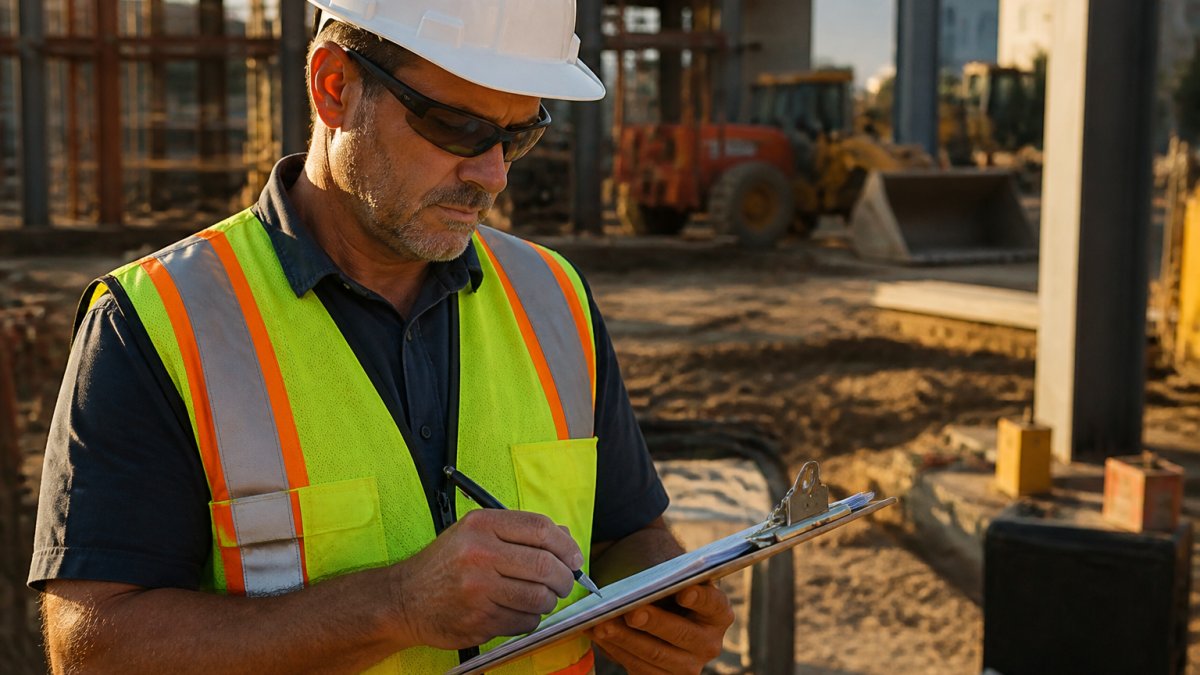
Walk through your project site and compare actual conditions to your written construction safety compliance plan. Verify that hazard controls are in place and functioning correctly. Photograph conditions that do not comply with your plan for documentation of corrective actions needed.
Interview workers to verify that they understand the hazards at their worksite and the procedures for protecting themselves. Ask workers about the training they received, the hazards they have identified, and any unsafe conditions they have observed.
Documentation Review and Corrective Action
Review all training records to verify that workers have received required training before beginning work at your site. Check that training records include the date of training, the content covered, and the trainer’s name. Verify that workers who have changed job assignments or worked at your site for more than one year have received refresher training as required.
Examine incident investigation reports to ensure that all injuries, near-misses, and unsafe conditions have been documented and investigated. Verify that each investigation includes a description of what happened, the cause of the incident, and the corrective actions taken to prevent recurrence. Check that corrective actions have been completed and that follow-up has been conducted to verify effectiveness.
Create a corrective action list identifying any gaps between your written construction safety compliance plan and actual site conditions. Prioritize corrective actions based on the severity of the hazard. Assign responsibility for completing each corrective action and establish a deadline.
Employer and Contractor Responsibilities Under Cal/OSHA
Construction projects typically involve multiple employers: the project owner, the general contractor, and various subcontractors. Each has specific responsibilities under Cal/OSHA regulations, and failure to understand these responsibilities can result in citations to the wrong party or missed compliance obligations.
The general contractor is responsible for ensuring that all contractors and subcontractors comply with Cal/OSHA requirements. This includes pre-qualifying contractors based on their safety record, providing site-specific safety orientation to all contractors, and monitoring contractor compliance with safety procedures.
Subcontractors are responsible for complying with Cal/OSHA requirements for the work they perform. A subcontractor cannot delegate safety responsibility to the general contractor. However, the general contractor remains responsible for ensuring that subcontractors comply.
Project owners have limited direct responsibility for worker safety but may be cited if they have direct control over the means and methods of construction.
Workers are responsible for following safety procedures and reporting hazards. Your construction safety compliance plan must include procedures for addressing worker non-compliance with safety rules.
Responding to Cal/OSHA Citations and Violations
If Cal/OSHA issues a citation, you have 15 days to respond. This is a critical window.
An informal conference allows you to meet with the Cal/OSHA inspector to discuss the citation, present evidence of corrective actions, and potentially negotiate a settlement. Many citations can be resolved through informal conferences, which is far preferable to formal litigation.
If you contest the citation, the case will proceed through Cal/OSHA’s appeals process. You will have the opportunity to present evidence, cross-examine witnesses, and argue that the citation should be withdrawn or modified.
Document all corrective actions you take in response to a citation. Photograph hazards before and after correction. Retain training records showing that workers received instruction on the correct procedure.
A comprehensive construction safety compliance plan protects your workers, demonstrates regulatory compliance, and provides a defense against Cal/OSHA citations. The plan must be customized to your specific projects, implemented consistently across all worksites, and updated regularly as conditions change.
Frequently Asked Questions
What should a construction safety compliance plan include?
A compliant construction safety compliance plan must include hazard identification and assessment, control measures, employee training requirements, personal protective equipment (PPE) specifications, incident reporting procedures, and emergency response protocols. Under California Code of Regulations Title 8, the plan must address site-specific hazards such as fall protection, confined space entry, lead exposure, and hazardous materials handling. Documentation of safety communications, inspection schedules, and corrective action processes are also essential. The plan should assign clear responsibility for each element to construction employers, general contractors, subcontractors, and workers.
Does a California construction company need an Injury and Illness Prevention Program?
Yes. Cal/OSHA requires all construction employers with employees to maintain a written Injury and Illness Prevention Program (IIPP). The IIPP must identify workplace hazards, establish methods to correct hazardous conditions, and provide employee training. Construction companies must document the program, conduct regular workplace inspections, investigate incidents, and maintain records of safety training and corrective actions. The IIPP is a foundational compliance requirement and forms the basis for site-specific safety plans on individual projects.
How often should construction safety plans be reviewed and updated?
Construction safety plans should be reviewed before each new project phase or when hazards change. Cal/OSHA requires periodic workplace inspections and hazard assessments; most construction sites benefit from weekly or bi-weekly safety reviews. After any incident, near miss, or regulatory inspection, the plan must be updated to reflect corrective actions. Annual reviews of the IIPP are standard practice, and plans must be revised whenever new equipment, processes, or hazardous materials are introduced to the worksite.
What records should construction employers keep for safety compliance?
Construction employers must maintain training records showing employee names, dates, and topics covered. Inspection records documenting hazard assessments, corrective actions taken, and completion dates are required. Incident reports, investigation findings, and follow-up corrective actions must be preserved. OSHA Form 301 (Injury and Illness Incident Report) and supporting documentation are mandatory. Additionally, records of safety communications, permit applications, and compliance certifications should be kept. Cal/OSHA inspectors will request these records during a compliance inspection, so organized, accessible documentation is critical for demonstrating good-faith compliance efforts.
What is the difference between an IIPP and a site-specific safety plan?
An Injury and Illness Prevention Program (IIPP) is the company-wide policy and framework that applies across all projects and worksites. It establishes general hazard identification procedures, training protocols, and incident reporting systems. A site-specific safety plan is tailored to a particular construction project and details the unique hazards, control measures, and procedures for that specific worksite. The IIPP is the foundation; the site-specific plan is the application. Both are required under California Code of Regulations Title 8 for construction employers.
How can a construction site safety audit identify compliance gaps?
A construction site safety audit systematically reviews hazard identification, control measures, training records, PPE availability, and incident documentation against Cal/OSHA requirements. Auditors inspect the worksite for hazardous conditions, verify that corrective actions have been completed, and confirm that employees understand safety procedures. Documentation gaps, missing training records, or incomplete corrective action logs are red flags. A thorough audit compares actual practices to the written IIPP and site-specific safety plan, revealing where training, equipment, or procedures fall short. This identifies vulnerabilities before a regulatory inspection.
What happens if Cal/OSHA issues a citation for safety violations?
A Cal/OSHA citation includes the violation, penalty amount, and a 15-day deadline to respond. Employers can pay the penalty, request an informal conference to dispute or negotiate, or file a formal appeal. The response must address how the violation will be corrected and when. Serious violations carry higher penalties and may trigger additional scrutiny. Employers facing citations should respond promptly and document all corrective actions. Professional assistance can strengthen the response and reduce penalty exposure.