
Table of Contents
- What California Safety Compliance Actually Requires of a Small Business
- Steps to Create a Compliant California IIPP
- Cal/OSHA Recordkeeping Requirements You Must Maintain
- Common Compliance Mistakes Small Employers Make
- The 15-Day Citation Response Window
- When to Bring In Outside Help for California Safety Compliance
- Frequently Asked Questions
Last Updated: September 16, 2026
What California Safety Compliance Actually Requires of a Small Business
California safety compliance for small business is the practice of meeting Cal/OSHA’s Injury and Illness Prevention Program (IIPP) mandate, recordkeeping duties, and hazard correction obligations under Title 8 of the California Code of Regulations. At McNeil Safety Consulting, we work with employers across California and nationwide who discover these requirements only after an inspector arrives. The core obligation is simple to state: every employer with at least one employee must have a written, effective IIPP. What trips people up is the word “effective.” Cal/OSHA does not accept a binder that sits on a shelf. It wants training records, inspection documentation, and proof that identified hazards were corrected.
Small employers often assume size buys them leniency. It does not. The IIPP requirement applies regardless of headcount, and the recordkeeping rules tighten once you cross ten employees. Below, we break down what an inspector actually looks for, how to build the program, and what happens when a citation lands on your desk.
Steps to Create a Compliant California IIPP
Building a compliant IIPP starts with the seven elements Cal/OSHA requires, then adds the training and review cycle that keeps the document current. The written plan is the easy part. The maintenance is where most programs fail.
Cal/OSHA IIPP requirements, Title 8 CCR Section 3203
Write the Seven Required Elements
A compliant IIPP must contain seven distinct sections. Missing any one of them is a standalone violation.
- Responsibility: Name the person accountable for the program, by title.
- Compliance: Describe how you hold employees accountable, including discipline where needed.
- Communication: Explain how employees report hazards without fear of retaliation.
- Hazard assessment: List the inspections and procedures you use to find hazards.
- Hazard correction: Describe how and when you fix what you find.
- Training: Cover who gets trained, on what, and when.
- Records: Document everything above and state where it lives.
The communication element is the one inspectors probe hardest. If your plan says employees can report hazards but no reporting channel exists in practice, the written element fails on implementation.
Train, Document, and Review
Training must happen when an employee is hired, when they take on a new assignment, when a new hazard is introduced, and after any incident. Document the date, the trainer, the topic, and who attended.
Review the program at least annually, and again whenever you change equipment, processes, or worksites. A common mistake is treating the IIPP as a one-time document. Treat it as a living record instead.
An undocumented training session is treated the same as no training at all. If you cannot produce a sign-in sheet or training log, Cal/OSHA will not credit the session during an inspection.
Cal/OSHA Recordkeeping Requirements You Must Maintain
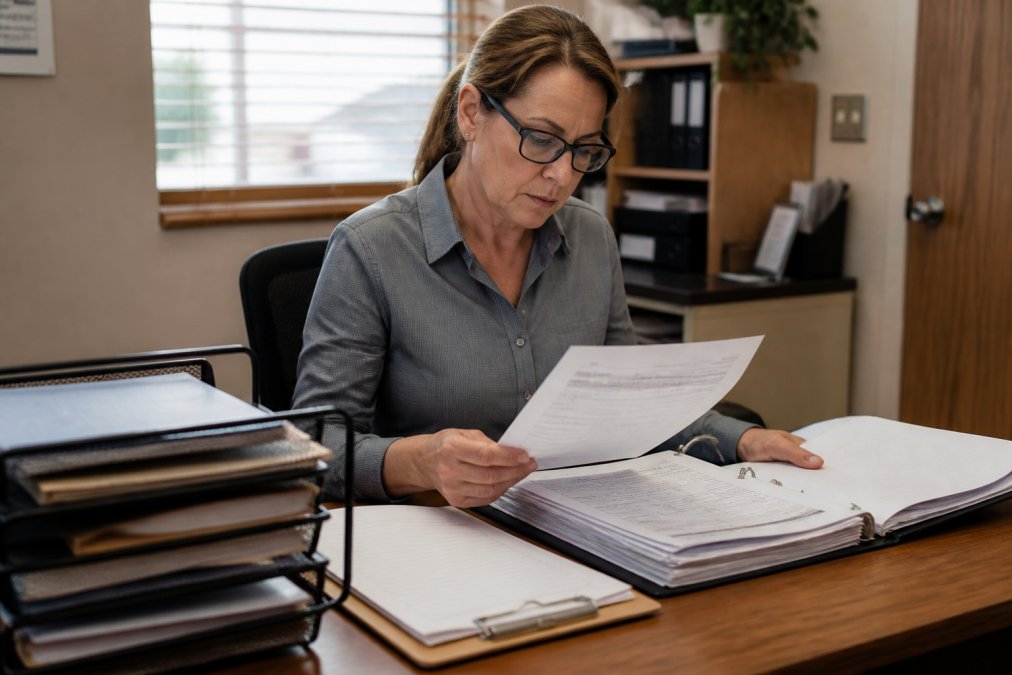
Cal/OSHA recordkeeping requirements depend on your headcount, but the baseline applies to nearly everyone. You must log work-related injuries and illnesses, report serious incidents to Cal/OSHA within eight hours for a fatality or serious injury, and post your annual summary where employees can see it.
The rules scale with size:
| Employer Size | Key Recordkeeping Obligations |
|---|---|
| 1-10 employees | IIPP required; injury log recommended for tracking |
| 11+ employees | Written IIPP plus Cal/OSHA 300 log maintained |
| Any size | Report fatality or serious injury within 8 hours |
| Any size | Post annual summary from February 1 to April 30 |
The eight-hour reporting clock is unforgiving. Many employers miss it because they spend the first day investigating internally before notifying the state. Report first, investigate second.
Cal/OSHA reporting and recordkeeping guidance
Common Compliance Mistakes Small Employers Make
The same mistakes show up in inspection after inspection, and most trace back to documentation gaps rather than missing equipment. Employers buy the right gear and then fail to prove they trained anyone on it.
Three patterns recur. First, an IIPP written from a template that names a safety officer who left two years ago. Second, hazard assessments performed once at startup and never repeated. Third, training delivered verbally with no record. Each one hands an inspector an easy finding.
A fourth mistake is subtler: correcting a hazard without writing down that you corrected it. Cal/OSHA wants to see the correction documented, not just completed. A dated work order or inspection note closes that gap.
Photograph every hazard you correct, and attach the photo to the inspection log with a date. It takes seconds and creates a defensible record that a written note alone cannot match.
The 15-Day Citation Response Window
You have 15 working days from receipt of a Cal/OSHA citation to contest it, and missing that window makes the citation final. The deadline is not a suggestion. Once it passes, the penalties stand and your appeal options close.
Response options fall into three paths: pay the penalty, request an informal conference with the district manager, or file a formal appeal with the Appeals Board. An informal conference can resolve classification disputes without a hearing, but it does not extend the 15-day deadline for filing a formal appeal if talks stall.
Cal/OSHA Appeals Board filing procedures
This is where the clock matters most. Employers who wait to “see how it goes” with an informal conference often lose their appeal rights entirely. File the formal appeal to preserve the deadline, then negotiate.
The 15-day window runs on working days, not calendar days, and it starts when you receive the citation, not when it was issued. Confirm your receipt date in writing.
When to Bring In Outside Help for California Safety Compliance
Outside help makes sense when a citation is active, when you lack the in-house expertise to run exposure monitoring, or when your IIPP has not been reviewed in years. A 30-employee general contractor facing an active citation with days left on the clock is a different situation from a manufacturer planning next year’s program.
McNeil Safety Consulting handles Cal/OSHA and federal OSHA citation defense, industrial hygiene, and exposure assessment for employers across California and nationwide. The company is led by Michael Karl McNeil, a former Fire Battalion Chief with occupational safety experience since 1989, and holds REP, RIH, and QSD professional designations. A licensed vocational nurse on staff covers occupational health, infection control, and OSHA medical surveillance. Every engagement is handled personally by the two principals and is never subcontracted.
If your situation involves a citation deadline, industrial hygiene monitoring, or a safety program that needs rebuilding from the ground up, that is the point to call. If you simply need to update a working IIPP, your own team can often handle it.
A citation with days left on the clock, an IIPP that has not been touched in years, or a hazard you cannot measure without instrumentation: these are the moments that decide whether a small employer stays compliant or pays. McNeil Safety Consulting provides citation defense, industrial hygiene monitoring, and safety plan writing across California and nationwide, backed by a former Fire Battalion Chief and a licensed vocational nurse on staff. Every project is handled personally by the two principals, never subcontracted. Contact McNeil Safety Consulting or call (626) 546-9384 to request a consultation.
Frequently Asked Questions
What are the mandatory safety requirements for small businesses in California?
Every California employer with at least one employee must have a written Injury and Illness Prevention Program, a training and hazard-correction record, and an OSHA 300 log if the business has more than ten employees. You also need required postings, an emergency action plan, and hazard-specific programs such as heat illness prevention for outdoor work. Cal/OSHA applies these rules by industry, not by headcount, so a 12-person shop can face the same program requirements as a larger operation.
How do I create a compliant IIPP?
Build the program around the seven required elements: responsibility, compliance, communication, hazard assessment, accident investigation, hazard correction, and training. Name the person accountable, put the IIPP in writing, and keep records of every inspection, correction, and training session. The steps to create a compliant California IIPP matter less than the documentation behind them, because Cal/OSHA judges the program by what you can show. Review it annually and after any serious incident.
What records must a small business maintain for Cal/OSHA compliance?
Keep your written IIPP, employee training records with dates and signatures, hazard inspection and correction logs, and the OSHA 300, 300A, and 301 forms if you have more than ten employees. Injury records must be kept for five years, and the 300A summary must be posted from February 1 through April 30. Some industries must also submit 300A data electronically. Missing records are one of the fastest ways a routine inspection becomes a citation.
How often should safety training be conducted for California employees?
Train new hires before they start work, whenever a new hazard or process is introduced, and when an employee is assigned a new task. Refresher training should follow your IIPP schedule and any incident that reveals a gap. Certain programs carry their own timelines, such as heat illness training before outdoor work begins. Document every session with the date, topic, trainer, and attendee names so the record holds up during an inspection.
What are the specific Cal/OSHA requirements for heat illness prevention?
California’s heat illness rule applies to outdoor places of employment and requires water, shade, rest breaks, acclimatization for new workers, a written plan, and training in a language employees understand. Supervisors need additional training on emergency response. The rules apply whenever the temperature reaches 80 degrees Fahrenheit, and high-heat procedures begin at 95 degrees. Documentation of training and shade availability is what Cal/OSHA inspectors ask for first.
How long do I have to respond to a Cal/OSHA citation?
You have 15 working days from the date the citation is received to file a written appeal with the Appeals Board. That clock does not pause while you gather information, so the response should begin the day the citation lands. Missing the deadline makes the citation final, and the penalty becomes due. Contact McNeil Safety Consulting at (626) 546-9384 if you need help inside that window.