
Table of Contents
- Why Cal/OSHA Penalties Are Higher Than You Expect
- OSHA Penalty Calculation Factors You Must Know
- Step 1: Request an Informal Conference with Cal/OSHA
- Step 2: Correct the Hazard and Document Everything
- Step 3: Navigate the Cal/OSHA Appeal Process
- Post-Citation Remediation Timeline: What Happens Next
- Small Business Mitigation Strategies That Work
- When to Bring In Professional Help
- Frequently Asked Questions
Last Updated: September 9, 2026
A Cal/OSHA citation often lands with a penalty figure that feels disproportionate to the violation. Many employers accept the initial assessment as final, not realizing that cal/osha citation penalties are negotiable through informal conferences, abatement documentation, and formal appeals. This guide from McNeil Safety Consulting walks through the specific steps to reduce them.
The penalty amount printed on the citation is rarely the final number. Cal/OSHA’s formula leaves room for meaningful reduction through documented good faith and prompt corrective action. Below, we break down the calculation factors, the negotiation workflow, and the exact documentation you need.
Why Cal/OSHA Penalties Are Higher Than You Expect
The initial penalty figure often shocks employers because Cal/OSHA applies a classification system that escalates costs quickly. A serious violation carries a substantially higher base penalty than a general or regulatory violation, and willful classifications can multiply the cost several times over. The statutory maximums are adjusted annually for inflation each January.
The citation document itself contains the roadmap for reduction. It lists the classification, the proposed penalty, and the abatement date, and each element can be challenged or negotiated. Those who respond with a well-documented corrective action plan and a clean history often see their cal/osha citation penalties reduced significantly before a formal hearing.
OSHA Penalty Calculation Factors You Must Know
The penalty calculation is not arbitrary. Cal/OSHA applies a formula that weighs several factors, and understanding each one tells you where to focus your reduction arguments. The factors are severity of the violation, probability of injury, employer size, history of violations, and good faith efforts to comply. Cal/OSHA’s official guide to penalty calculations provides the technical framework, but the practical application comes down to how you present your case.
Severity and Probability of the Violation
Severity measures the likely outcome if the hazard caused an incident, ranging from minor injury to serious physical harm or death. Probability assesses the likelihood the hazard would actually result in injury. Together, these factors set the base penalty amount. If the hazard was corrected before the inspection, documentation can support a lower severity rating.
Employer Size and History of Violations
Smaller employers receive more favorable treatment in the penalty structure. Cal/OSHA applies size-based adjustments that reduce penalties for businesses with fewer employees. A clean history of violations also works in your favor, while a pattern of repeat violations justifies higher assessments. Emphasizing a clean record during negotiations is a powerful lever.
Good Faith Efforts and Quick-Fix Programs
Cal/OSHA rewards employers who demonstrate genuine commitment to safety through active safety programs, employee training records, and prompt response to the citation. The quick-fix program offers a specific reduction for employers who correct the violation during the inspection itself or immediately after, before the citation is formally issued.
Step 1: Request an Informal Conference with Cal/OSHA
Before any formal appeal, request an informal conference with the Cal/OSHA compliance officer and their supervisor. This meeting is your first and best opportunity to reduce cal/osha citation penalties without entering the formal appeals process. Many employers resolve their citations entirely at this stage.
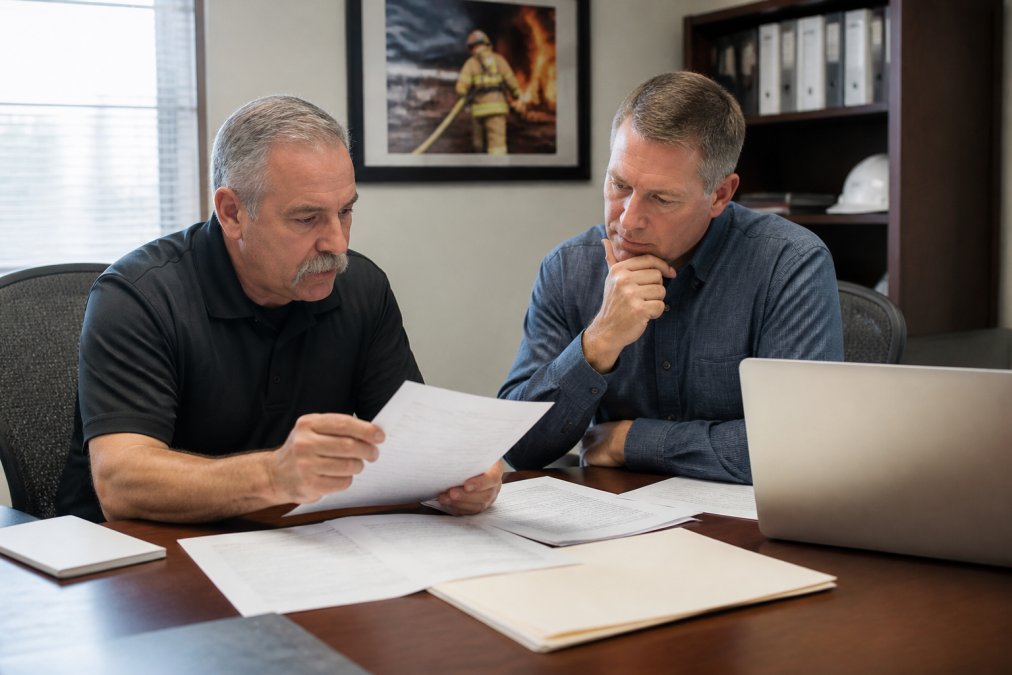
The Tactical Negotiation Workflow
The informal conference is a structured negotiation where the employer controls the narrative. Use this workflow:
- Open with the correction, not the excuse. Lead by stating clearly that the hazard has been abated. Show photographic proof and dated receipts before discussing any disagreement.
- Acknowledge the citation’s validity selectively. If the classification is accurate, say so plainly. If it is not, state your objection with evidence. Blanket agreement weakens your position; blanket denial destroys your credibility.
- Present your good faith evidence in a folder. Hand the compliance officer a physical packet containing your written Injury and Illness Prevention Program, training sign-in sheets, and abatement documentation.
- Ask about the penalty adjustment factors directly. Ask, “What adjustment factors were applied to this penalty, and what documentation would support a further reduction?” This forces a specific answer and reveals what evidence they want to see.
- Propose a specific number. Propose a specific penalty amount based on the calculation factors discussed. If the penalty reflects no good faith adjustment, present your safety program documentation and ask for the maximum good faith reduction.
- Request the abatement date extension in writing. If you need more time to complete abatement, ask for it during the conference and confirm it in writing before you leave.
- Close with a summary. Summarize what was agreed upon: the penalty amount, the abatement date, and any follow-up actions. Ask the compliance officer to confirm that summary.
Do not use the informal conference to argue that the regulation itself is unfair or that the compliance officer was wrong to inspect your site. The conference is for discussing the citation’s facts and penalty, not for challenging the regulatory framework. Save those arguments for the formal appeals process.
What to Bring to the Conference
Arrive prepared with documentation that supports your position. Bring your written safety program, training records, and any evidence that the hazard was corrected. If you believe the classification is wrong, bring evidence showing the actual conditions at the time of inspection.
Bring a single, organized binder with tabbed sections for each document. The compliance officer should be able to find any document in under ten seconds. The binder should include:
- The citation itself, with your notes on each item
- Your written abatement plan with completion dates
- Photographic proof of the corrected hazard, dated and labeled
- Training records for affected employees, with sign-in sheets
- Your written Injury and Illness Prevention Program, updated to prevent recurrence
- Any relevant safety data sheets or exposure monitoring results
- Your company’s violation history summary, showing a clean record if applicable
The informal conference is a negotiation, not a confession. Walk in with a specific penalty number in mind, a binder of evidence, and a willingness to ask direct questions about the calculation factors. Employers who follow this workflow consistently see better outcomes than those who simply ask for mercy.
If no settlement is reached, you still have the option to file a notice of contest within the 15-working-day window. The conference does not extend that deadline unless you have a written agreement.
Step 2: Correct the Hazard and Document Everything
Abatement is the single most important factor in penalty reduction. Correct the violation immediately, then document every step with photographs, dated receipts, and written records of new procedures.
The Good Faith Documentation Evidence Checklist
Good faith is a documented pattern of behavior that Cal/OSHA can verify. The penalty reduction structure rewards employers who prove they took safety seriously before the inspection, responded promptly after the citation, and implemented changes that prevent recurrence.
Pre-Inspection Evidence (shows the violation was an anomaly, not a pattern):
- Your written Injury and Illness Prevention Program (IIPP), signed and dated, with the specific hazard addressed in the citation already covered by a written procedure. If the procedure existed but was not followed, this proves a training gap rather than a systemic failure.
- Training records for the affected employees, including the specific date they were trained on the hazard cited. Pair sign-in sheets with the training agenda and materials used.
- Maintenance logs or inspection records showing that the equipment or area was regularly checked. A log with monthly entries for the past year is far more persuasive than a single entry from the week before the inspection.
- Safety meeting minutes that mention the specific hazard or general category. This shows ongoing attention to safety, not just a reaction to the citation.
Post-Citation Abatement Evidence (shows prompt corrective action):
- Photographs of the corrected condition, dated and labeled. Take the photo from the same angle as the compliance officer’s original photo if possible.
- Dated receipts for any equipment, guards, materials, or personal protective equipment purchased for abatement. A receipt from the day after the inspection is powerful evidence of prompt action.
- A written abatement plan that lists each step taken, the date each step was completed, and the person responsible.
- Updated written procedures that address the root cause of the violation. If the citation was for an unguarded machine, include the new lockout/tagout procedure.
- Training records for the retraining session conducted after the citation, including the date, trainer’s name, agenda, and sign-in sheets.
Ongoing Compliance Evidence (shows the fix will stick):
- A schedule for future audits or inspections that specifically checks for recurrence of the cited hazard.
- A revised IIPP that incorporates the lessons learned from the citation. Cal/OSHA expects your IIPP to be a living document, not a static file.
- Any communication to employees about the citation and the corrective actions taken, such as a safety bulletin or toolbox talk handout.
How to Organize and Present the Evidence
Organize these documents chronologically and bring multiple copies to every meeting with Cal/OSHA.
Take a photograph of the corrected hazard from multiple angles, including one wide shot that shows the surrounding area and one close-up that shows the specific guard, label, or control that was added. Date-stamp the photos using your camera settings. Photographs without dates are far less persuasive.
The Quick-Fix Distinction
If you corrected the hazard while the compliance officer was still on site, say so explicitly in your documentation and during the informal conference. The quick-fix reduction is automatic in many cases, but only if you can prove the correction happened before the citation was issued.
If the correction happened after the citation but within the abatement period, you do not qualify for the quick-fix reduction, but your prompt action still supports a good faith adjustment.
Do not falsify dates or backdate documents. Cal/OSHA compliance officers and appeals board judges have seen every documentation trick. A single falsified document destroys your credibility and can convert a simple violation into a willful classification with substantially higher penalties.
Good faith is proven with documents, not promises. Build a chronological evidence packet that shows your safety program existed before the inspection, your correction happened promptly after the citation, and your ongoing procedures prevent recurrence. That packet is the foundation of every penalty reduction argument you will make.
Step 3: Navigate the Cal/OSHA Appeal Process
If the informal conference does not produce a satisfactory result, the formal appeal process begins with filing a notice of contest, which triggers a hearing before the Occupational Safety and Health Appeals Board. This proceeding can be lengthy but offers the possibility of having citations dismissed or penalties reduced substantially.
The 15-Day Deadline and Notice of Contest
The notice of contest must be filed within 15 working days of receiving the citation. Missing this deadline forfeits your right to appeal entirely. The notice must be in writing and must specify which citations and penalties you are contesting.
Post-Citation Remediation Timeline: What Happens Next
The 15-day window for the notice of contest is fixed, but the informal conference can be requested before that deadline, effectively pausing the clock while you negotiate. The full appeals process can take months, during which the original abatement date may still apply unless you request an extension.
Small Business Mitigation Strategies That Work
Small employers have specific advantages in penalty negotiations that larger operations do not. The size-based penalty adjustments already reduce the base amount, and a limited history of violations strengthens your good faith argument. For small businesses, the most effective strategy is to lead with your size and your commitment to fixing the problem. Cal/OSHA’s own consultation services for small employers offer free and confidential help with identifying hazards and improving safety programs, which can also serve as evidence of good faith during penalty discussions.
The consultation service is separate from enforcement and provides a no-penalty pathway to compliance. Requesting a consultation visit after receiving a citation demonstrates proactive engagement with safety.
When to Bring In Professional Help
Not every citation requires professional representation, but certain situations clearly warrant it. If the citation involves a serious injury or fatality, if willful violations are alleged, or if the penalty amount threatens your business’s financial stability, the stakes are too high to navigate alone. The Cal/OSHA appeal process involves complex procedural rules, and mistakes at the filing stage can be fatal to your case. The California Department of Industrial Relations overview of the appeals process outlines the requirements, but applying them correctly in a contested case demands experience.
McNeil Safety Consulting provides Cal/OSHA citation defense and appeals representation across California and nationwide. Led by a former Fire Battalion Chief with occupational safety experience since 1989, the company combines regulatory defense with industrial hygiene expertise, exposure assessment, and serious injury investigation. Every engagement is handled personally by the two principals and never subcontracted.
| Step | Action | Timeline | Outcome |
|---|---|---|---|
| 1 | Request informal conference | Days 1-10 | Possible settlement, reduced penalty |
| 2 | Correct hazard, document abatement | Immediate | Supports good faith argument |
| 3 | File notice of contest if needed | Within 15 working days | Formal appeal hearing |
| 4 | Engage professional representation | Before deadlines lapse | Expert navigation of appeals process |
The cal/osha citation penalties printed on your citation are a starting point for negotiation, not a final judgment. Employers who respond quickly, document their corrective actions thoroughly, and understand the calculation factors can achieve meaningful reductions. The 15-day deadline creates urgency, but it also creates opportunity for those who act decisively.
Frequently Asked Questions
How long does an employer have to appeal a Cal/OSHA citation?
You have 15 working days from the date Cal/OSHA issues the citation to file a Notice of Contest with the Appeals Board. Missing this deadline means the citation becomes final and you lose the right to challenge it. If you plan to reduce Cal/OSHA citation penalties, request a copy of your citation immediately upon receipt and calendar the deadline. Many employers also request an informal conference within this same window to discuss penalty reductions before filing a formal appeal.
What factors does Cal/OSHA consider when calculating penalties?
Cal/OSHA penalty calculation factors include the severity of the violation, the probability of injury or illness, your employer size, and your history of violations over the past few years. Good faith efforts to comply and prompt abatement can also reduce penalties. For example, a small employer with no prior violations that immediately corrects a serious hazard may qualify for significant reductions. Understanding these OSHA penalty calculation factors helps you present the strongest case during an informal conference.
What is the difference between an informal conference and a formal appeal?
An informal conference with Cal/OSHA is a voluntary meeting between you and the compliance officer before a citation becomes final. It is your best opportunity to reduce Cal/OSHA citation penalties without formal litigation. A formal appeal, filed through the Cal/OSHA appeal process, goes before the Occupational Safety and Health Appeals Board and may involve hearings, evidence, and legal arguments. Most penalty reductions happen at the informal conference stage, so always request one before deciding whether to pursue a formal appeal.
Can a small business get Cal/OSHA penalties reduced?
Yes. Cal/OSHA penalty calculation factors include employer size, and small businesses typically receive larger percentage reductions than large corporations. A business with fewer than 25 employees may qualify for a substantial penalty cut. Demonstrating good faith, correcting hazards quickly, and having no history of serious violations also help. If you have 15 days or fewer left to respond, act immediately. Documentation of your corrective actions and safety program improvements strengthens your case for a reduced penalty.
The process of reducing cal/osha citation penalties rewards preparation and penalizes delay. McNeil Safety Consulting helps employers across California and nationwide respond effectively within the 15-day window, combining citation defense with industrial hygiene and occupational health expertise to build comprehensive cases. Contact us and put a former Fire Battalion Chief’s decades of regulatory experience to work on your citation.