Last Updated: October 26, 2026
Quick Summary
To preserve evidence after a workplace fatality, secure the scene, control access with a signed log, and document everything before it moves. Then collect witness statements, place a written hold on digital and machine data, and issue a formal preservation letter while maintaining chain of custody.
- Stop work in the affected area and post one person at a single entry point to keep the access log.
- Photograph wide shots, mid-range shots, and close-ups before any cleanup or removal begins.
- Employers must report a work-related fatality to OSHA within 8 hours.
- Interview each witness privately, record their own words, and have them review and sign.
- Preserve native files with metadata and hash each export to start chain of custody.
Table of Contents
- Why Evidence Preservation Decides the Outcome of a Fatality Investigation
- Step 1: Secure the Scene and Control Access Immediately
- Step 2: Complete Workplace Incident Scene Documentation Before Anything Moves
- Step 3: Work Through the Workplace Incident Evidence Checklist
- Step 4: Collect Workplace Accident Witness Statements the Right Way
- Step 5: Preserving Workplace Records After an Accident, Including Digital and Machine Data
- Step 6: Coordinate With OSHA and Cal/OSHA Without Losing Control of the Evidence
- Step 7: Issue a Formal Preservation Letter and Maintain Chain of Custody
- Frequently Asked Questions
Why Evidence Preservation Decides the Outcome of a Fatality Investigation
When a worker dies on the job, the physical scene becomes the most valuable evidence in the case.
Evidence preservation is the controlled process of securing, documenting, and maintaining a fatality scene and its records so nothing is altered, lost, or destroyed. It protects the family’s legal claim, the employer’s defense, and the official investigation.
Three things happen fast after a workplace fatality, and all three can destroy evidence:
- Someone cleans the area out of shock or to “restore operations.”
- Equipment gets moved, repaired, or returned to service.
- Digital records overwrite themselves on a rolling cycle.
The steps below follow the sequence a serious injury and fatality investigation should take, from the first hour to the formal preservation letter.
Step 1: Secure the Scene and Control Access Immediately
A workplace fatality is not a normal accident scene. Law enforcement and the medical examiner typically take control of the body and the immediate area, and a regulator may arrive within hours. The employer’s job is not to run the scene, it is to preserve everything the responding agencies do not take and keep a clean record of who touched what.
The first hour, in order:
- Stop work in the affected area and account for all personnel. Life safety and body recovery come first, always.
- Call 911 and report the fatality. Do not move the deceased unless a responder directs it.
- Identify the incident area and establish a perimeter wider than the visible damage, debris fields, ejected parts, and fall paths extend well beyond where the worker was found.
- Designate one entry point and post one person there. That person keeps the access log.
- Begin the access log immediately: name, agency or employer, time in, time out, purpose. Log responders too, not just employees.
- Do not clean, repair, restart, or move equipment unless a responder or the medical examiner requires it for body recovery or life safety.
Working with responding agencies:
- Police and the medical examiner control the body and the area around it. Ask the lead investigator what area they are retaining and what the employer may document outside it.
- Photograph and measure from outside the retained area if you are not permitted inside. Wide shots, building layout, equipment positions visible from the perimeter, and the access log location all matter.
- Ask each agency for the lead investigator’s name and contact and the case number. Record it in the log.
- Do not interview witnesses about cause in front of responders or in a group. Note who was present and where, and defer substantive interviews until you have a controlled process (see Step 4).
- If a regulator arrives, cooperate fully, accompany the inspector, and keep your own parallel record of what was photographed, sampled, and removed.
Well-meaning supervisors often restart production, clean the area, or move equipment to protect the schedule.
What to capture before the scene is released:
- The access log, signed and time-stamped.
- The names, agencies, and case numbers of every responder and investigator.
- Perimeter photos showing the cordon and the surrounding area.
- The condition of the scene at the moment you arrived, described in writing, including anything that had already been moved before you got there and by whom.
McNeil Safety Consulting supports employers through serious injury and fatality investigation across California and the Western US, with every engagement handled personally by our two principals.
Step 2: Complete Workplace Incident Scene Documentation Before Anything Moves
Workplace incident scene documentation captures the scene exactly as found, before any cleanup or removal begins. Photograph, measure, and note everything in place, from wide shots to close detail.
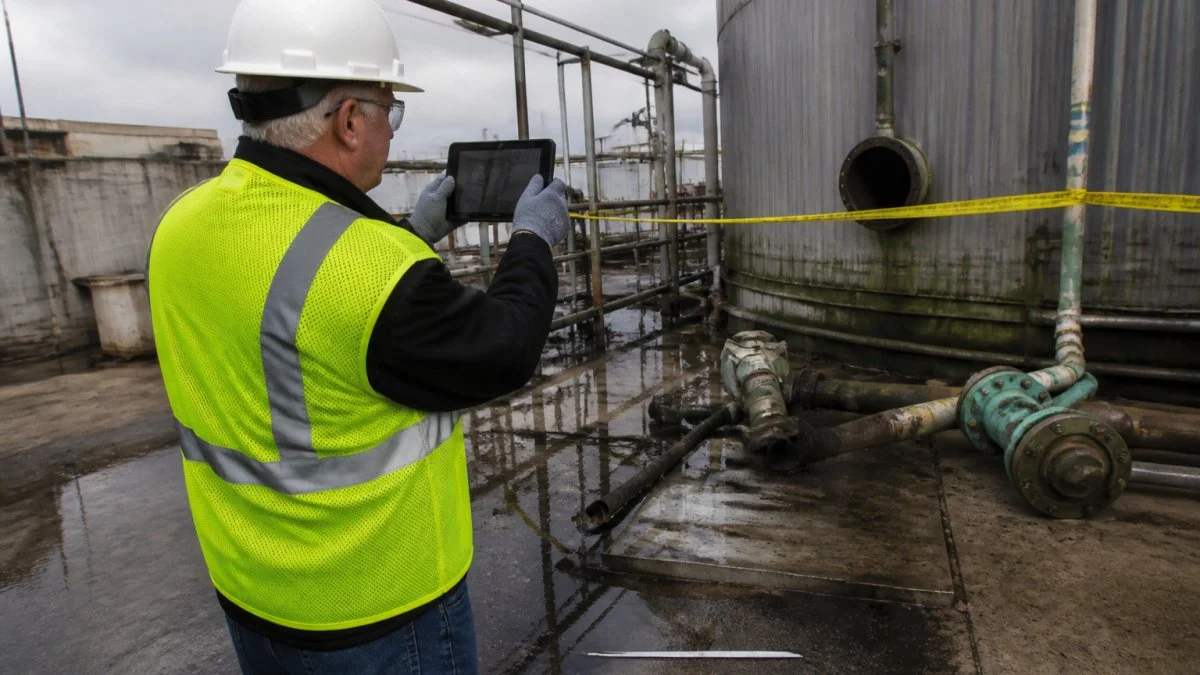
Good scene documentation follows a fixed order:
- Wide shots showing the whole area and its boundaries.
- Mid-range shots showing equipment and worker positions.
- Close-ups of controls, guards, and damaged parts.
- Photos of the floor, footwear, and any spills or debris.
- Notes on lighting, weather, and time of day.
Record video too, and narrate what you see without guessing at cause. The OSHA fatality reporting requirements require employers to report a work-related fatality within 8 hours, so document quickly and report on time.
Step 3: Work Through the Workplace Incident Evidence Checklist
A workplace incident evidence checklist keeps collection consistent when stress is high. Use the same list every time so nothing gets skipped.
| Evidence Type | What to Capture | Handling Rule |
|---|---|---|
| Photos and video | Scene, equipment, injuries | Store originals, no edits |
| Physical items | Damaged parts, tools, PPE | Bag, tag, seal, log |
| Witness details | Names, roles, contacts | Record before they leave |
| Machine data | Settings, logs, alarms | Preserve before reset |
| Records | Training, maintenance, safety | Copy and lock originals |
Damaged clothing, footwear, and personal property belong on this list. Bag each item separately, label it with the date and location, and store it in a sealed container. Never wash, repair, or discard anything tied to the incident.
Step 4: Collect Workplace Accident Witness Statements the Right Way
Workplace accident witness statements should be taken as soon as possible, one witness at a time, in the witness’s own words. Separating witnesses prevents stories from blending together.
Ask open questions first: “Tell me what you saw.” Then follow up on details. Record the witness’s full name, role, contact information, and the time the statement was taken.
- Interview each witness privately.
- Write down their words, not your summary.
- Have them review and sign the statement.
- Keep coworker and family guidance separate from fact-finding.
Step 5: Preserving Workplace Records After an Accident, Including Digital and Machine Data
Most evidence in a fatality case is not at the scene. It is in systems the employer controls: surveillance video, equipment logs, access-control records, maintenance histories, training files, and email.
The retention problem, in plain terms:
- Surveillance systems commonly overwrite on a rolling cycle measured in days or weeks. The clip you need may be gone before the investigation begins.
- Machine and vehicle data, equipment logs, alarm histories, dispatch records, access-control logs, can reset on power cycles, maintenance events, or scheduled purges.
- Email and messaging systems archive, auto-delete, or move to litigation-hold only when someone tells them to.
- Paper training and maintenance records get pulled, updated, and refiled, and the original version disappears.
The fix is to identify custodians and systems fast, issue a written hold, and preserve originals before anyone edits, exports, or “cleans up” a file.
A practical preservation sequence:
- Map the systems. List every system that could hold relevant data: video, access control, equipment telematics, building automation, alarm monitoring, phone and radio dispatch, email, messaging, and the HR and safety record systems.
- Identify the custodians. Name the person who controls each system and put the hold in writing to that person, with a copy to management.
- Suspend deletion. Ask IT and security to suspend auto-deletion and retention purges for the relevant accounts, cameras, and equipment until further notice.
- Preserve originals, not screenshots. Export native files with metadata intact where the system allows it. A phone photo of a monitor is not the video; a forwarded email is not the original with headers.
- Hash and log. Record a hash value for each exported file where practicable, note the export date, the exporting person, and the system and time range covered. That log is the start of chain of custody.
- Restrict access. Move preserved copies to read-only storage with limited access, and log who opens them.
What to preserve, by category:
| Category | Examples | Common loss mechanism |
|---|---|---|
| Video | Cameras covering the area, entrances, equipment | Rolling overwrite |
| Machine data | Equipment logs, alarm history, telematics, dispatch | Reset, purge, power cycle |
| Access records | Badge logs, gate logs, visitor logs | Retention purge |
| Maintenance | Work orders, inspection records, repair history | Update in place, discard |
| Training | Certifications, task training, refresher records | File replacement |
| Communications | Email, messages, radio traffic | Auto-delete, archive policy |
| Policies | Safety policies, JSAs, hazard assessments | Revision overwrites |
Preserve more than you think you need. It is far easier to explain why a preserved file was not relevant than why a relevant file was deleted after the fatality. A written hold naming the systems, custodians, and date is the most useful document an employer can create in the first 24 hours.
Employer-controlled evidence and formal requests. When the employer is not the party directing preservation, for example, when the family or another party needs records held by the employer, a staffing agency, a contractor, or an insurer, send a written preservation request to each holder. It should identify the incident, the record categories, the systems and custodians, and the date, and demand suspension of routine destruction. Send it early and keep proof of delivery.
Coordination with the official investigation. Regulators and law enforcement may request or remove records.
McNeil Safety Consulting provides serious injury and fatality investigation across California and the Western US. Every engagement is handled personally by our two principals.
Step 6: Coordinate With OSHA and Cal/OSHA Without Losing Control of the Evidence
Cooperation with regulators and control of the evidence are not opposites. You can work fully with inspectors while keeping a clear record of what they examine and what leaves the site.
OSHA and Cal/OSHA run their own investigation timelines and may photograph, sample, and interview independently. For protecting evidence during a federal inspection, see our guide on OSHA inspection defense for manufacturing. If more than one employer shares the site, our article on Cal/OSHA multi-employer worksite responsibilities explains who controls and preserves what. If citations follow, what happens after a Cal/OSHA informal conference helps you decide next steps.
McNeil Safety Consulting provides Cal/OSHA and federal OSHA citation defense, with every engagement handled personally by our two principals.
Step 7: Issue a Formal Preservation Letter and Maintain Chain of Custody
A preservation letter, sometimes called a spoliation letter, is a written demand telling every party holding relevant evidence to keep it. Send it to the employer, contractors, insurers, and anyone with records or footage.
Chain of custody runs alongside it. Log every item, every transfer, and every person who handled it. Store evidence in secure storage with limited access.
If citations are issued, timing matters. Our guide on how to respond to Cal/OSHA citations covers the 15-day response window, and our article on how to reduce Cal/OSHA citation penalties explains the factors that affect penalty outcomes.
A workplace fatality leaves an employer facing regulators, a grieving family, and a legal claim all at once.
Frequently Asked Questions
What should be preserved after a workplace fatality?
Preserve the physical scene, the equipment and materials involved, damaged clothing and footwear, and all photographs and video taken before anything is moved. Keep the original accident report, maintenance records, safety records, training documentation, and any surveillance footage or machine data. Store items in sealed containers with a written log of who handled them. The goal is to preserve evidence in an unaltered state.
How do you preserve physical evidence after a workplace incident?
Do not clean, repair, or dispose of anything involved in the incident. Photograph the item in place first, then move it only if authorities direct you to. Bag damaged clothing and footwear separately in paper or breathable containers, label each item with the date, time, and location, and log every transfer. Keep the items in secure storage with limited access.
What records should employers preserve after a workplace fatality?
Keep the incident report, maintenance and inspection records for the equipment involved, training records for the affected worker, and safety program documents such as the IIPP. Preserve surveillance footage, electronic access logs, and machine or vehicle data. Also retain witness statements and correspondence with OSHA or Cal/OSHA.
What should an employer do when OSHA investigates a workplace fatality?
Secure the scene and begin scene documentation. Designate one point of contact for the inspector, accompany them during the walkthrough, and take your own photos and notes. Provide requested records but track what you hand over. Contact McNeil Safety Consulting to request a consultation.
